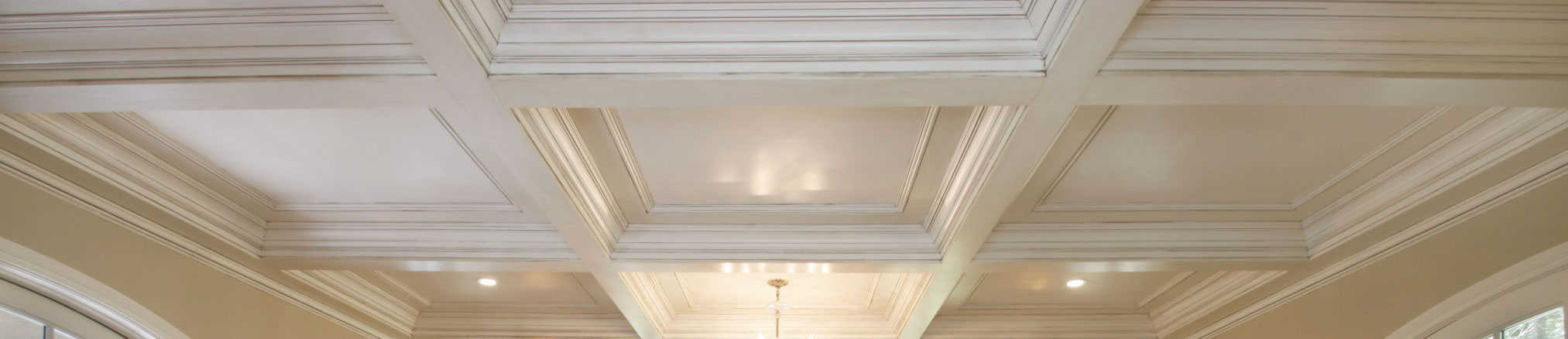



Why Real Wood Ceiling & Wall Planks Never Go Out of Style?
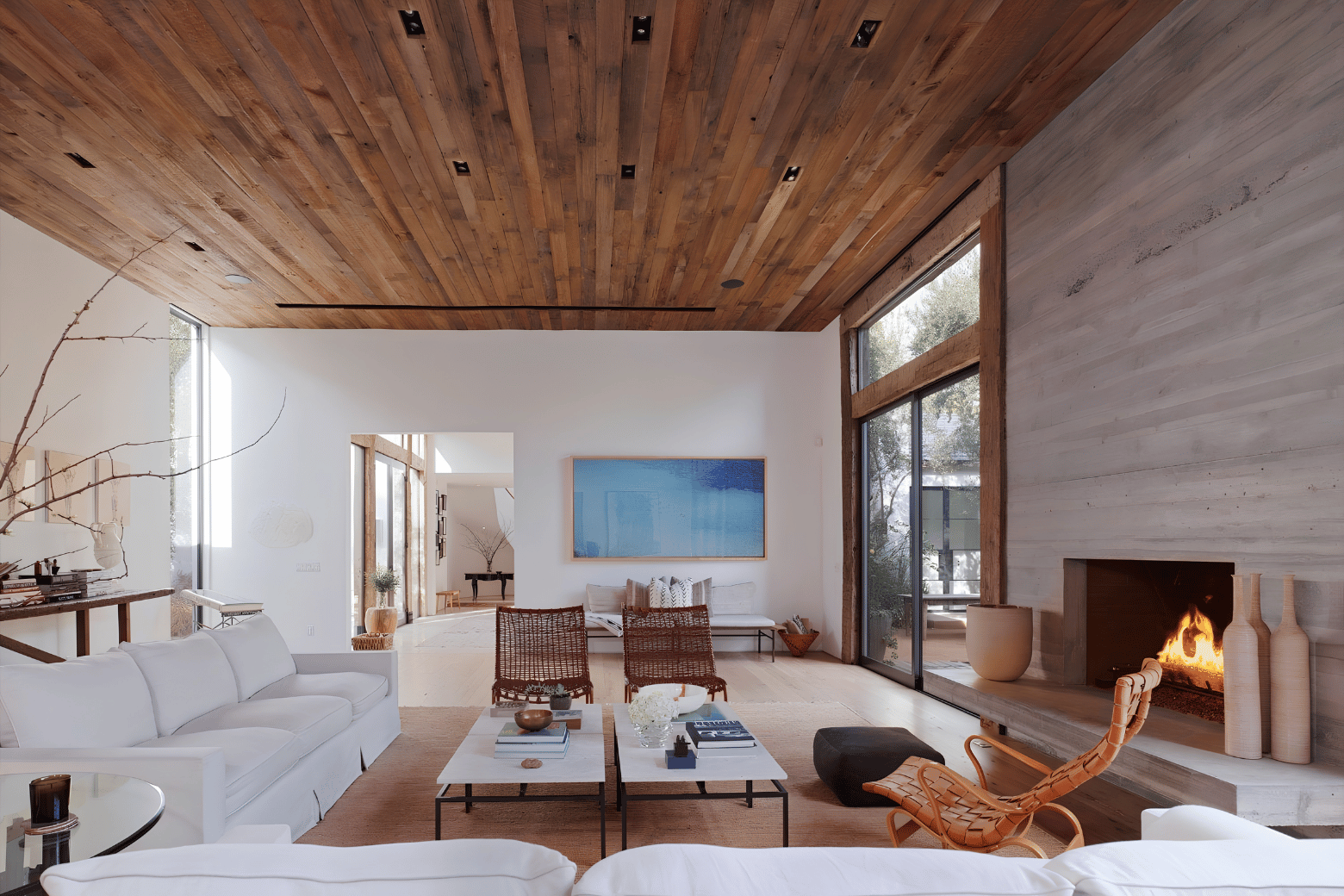
Trends come and go. Shiplap got overexposed. Accent walls in bold paint colors had their moment and faded fast. So why has real wood managed to stay relevant through every single design cycle for the last hundred years? The answer is simple. Wood doesn't follow trends. It sits underneath them.
Every major wall covering idea, from farmhouse shiplap to modern slat walls to rustic cabin paneling, traces back to the same root material. Real wood ceiling and wall planks have outlasted wallpaper fads, paint trends, and tile phases because they offer something none of those finishes can fully replicate: texture, depth, and warmth that actually changes with the light throughout the day.
In this blog, we'll look at why wood planks for walls remain one of the most timeless design choices a homeowner can make, how they compare to shortcuts like peel and stick wood planks for walls, and why the material itself matters more than people realize.
Why Has Wood Outlasted Every Wall Covering Trend?
Most wall covering ideas are surface deep, literally. Paint is a color. Wallpaper is a printed pattern. Tile is a flat, manufactured finish. Wood is different because it isn't simulating texture, it actually has texture, grain, and natural variation built into the material itself.
This is the core reason wood planks for walls have remained a constant across nearly every interior design era in American homes:
- Farmhouse style in the 2010s leaned heavily on shiplap and reclaimed wood walls
- Mid century modern homes used wood paneling as a defining structural and visual element
- Traditional and colonial interiors relied on wood wainscoting and paneled walls for formality
- Modern and transitional homes today use wood slat walls and planks for warmth against minimalist palettes
Different eras, different finishes, same underlying material. That consistency is rare in interior design, and it's exactly why wall planks continue to outperform shorter lived trends.
The Problem With Most Wall Covering Ideas
Here's something most homeowners don't realize until they've already committed to a trend: a lot of popular wall covering ideas age very specifically to a decade. Bold geometric wallpaper screams a certain year. Heavily textured paint finishes do the same. Even certain tile patterns become instantly datable once a style cycles out of favor.
Wood planks for walls avoid this problem almost entirely. A well installed wood wall from twenty years ago can still look intentional and current today, especially with a simple refresh in stain or paint. That's not a small advantage. It's the difference between a wall treatment that needs to be redone every decade and one that simply needs occasional maintenance.
Real Wood Wall Planks vs. Peel and Stick Wood Planks for Walls
This comparison comes up constantly, and it deserves an honest breakdown, because the two options are not interchangeable despite looking similar in photos.
| Feature | Real Wood Wall Planks | Peel and Stick Wood Planks for Walls |
|---|---|---|
| Material | Solid or engineered wood | Vinyl or adhesive backed laminate |
| Texture | Natural grain, dimensional | Printed pattern, flat surface |
| Durability | Decades, with proper care | Several years, prone to peeling |
| Refinishing | Can be sanded, stained, repainted | Cannot be refinished, must be replaced |
| Long Term Value | Increases perceived home value | Minimal to no added resale value |
| Installation | Requires basic carpentry | Easier, but less permanent |
Peel and stick wood planks for walls exist for a reason. They're inexpensive, fast to install, and useful for renters or short term updates. But they're a workaround, not a long term wall covering idea. Once the adhesive backing starts to fail, which typically happens within a few years depending on humidity and wall surface, the only real fix is removal and replacement.
Real wood, by comparison, ages instead of expiring. It can be restained, repainted, or simply cleaned, and it continues to look intentional rather than worn out.
Where Wood Planks for Walls Make the Biggest Impact?
Wall planks aren't limited to one style or one room. Here's where they consistently perform best across different home styles.
| Room | Why Wood Works Here | Common Style |
|---|---|---|
| Living Room | Anchors the largest open wall in the home | Horizontal wide plank paneling |
| Primary Bedroom | Creates a warm, grounded headboard wall | Vertical slat or shiplap planks |
| Home Office | Adds texture without visual clutter | Tongue and groove planks |
| Entryway | Makes a strong first impression | Vertical shiplap or board and batten |
| Basement | Adds warmth to a typically cold space | Engineered wood planks |
This versatility is part of why wood planks for walls show up across nearly every renovation style, from modern farmhouse to coastal to industrial loft conversions. To see finished rooms, browse the plank and paneling gallery.
How to Choose the Right Wall Planks for Your Space?
Not all wood planks for walls are created equal, and the right choice depends on a few specific factors:
- Room humidity levels: Bathrooms and basements need moisture resistant engineered planks rather than solid raw wood
- Wall orientation: Horizontal planks tend to widen a room visually, while vertical planks add height
- Existing trim and millwork: Plank profile and spacing should complement, not compete with, existing baseboards and crown
- Finish flexibility: Real wood allows for staining or painting later, which matters if your style preferences shift over time
- Installation method: Tongue and groove systems install faster and create a tighter, more seamless finished look. Measure your wall first, then check the installation guides
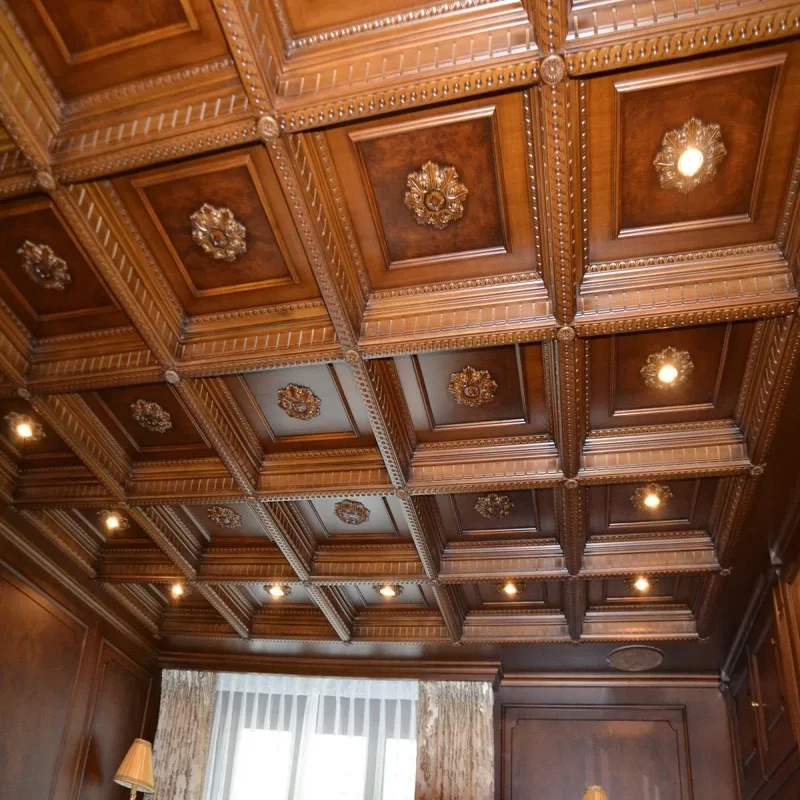
Planks also pair well with other ceiling features. Many rooms combine them with ceiling beams, such as Natural Series real wood beams or Molded Series faux wood beams, with decorative trusses in taller rooms, or with coffered ceiling systems. For lower ceilings, see how shallow beam kits preserve height, and if you want the look of wood or steel in a lighter material, compare faux wood planks and faux steel and concrete planks.
Why Tilton Coffered Ceilings Are Built for This Exact Need?
This is where Tilton Coffered Ceilings stands apart from typical big box wall covering ideas. Tilton manufactures real wood ceiling and wall planks, designed specifically for both DIY homeowners and trade professionals, right here in the USA.
Unlike peel and stick wood planks for walls, which are essentially a printed surface meant to mimic wood, Tilton's wall planks are genuine wood products engineered for precision tongue and groove installation. This means homeowners get the authentic grain, texture, and long term durability of real wood, without the unpredictability and labor cost of custom on site milling.
Because Tilton sells direct to consumers, there's no contractor markup standing between the manufacturer and your home. Samples are available before you commit, so you can see and feel the actual wood grain and finish in person rather than guessing from a photo. For homeowners who want wall planks that will still look intentional in fifteen years, not just on installation day, this direct, USA made approach makes a measurable difference. Questions first? Check the FAQs, compare products, or contact the team.
Conclusion
Trends are, by definition, temporary. Real wood is not. While most wall covering ideas eventually date themselves to a specific decade, wood planks for walls have remained a constant choice across farmhouse, modern, traditional, and transitional interiors for one simple reason: the material itself carries the design, not the trend around it.
Whether you're comparing real wood against peel and stick wood planks for walls, or simply trying to choose the right wall planks for a renovation, the long term value of authentic wood is difficult to match.
And for homeowners who want that authenticity without compromise, Tilton Coffered Ceilings remains a trusted, USA made source for wall planks built to last well beyond any passing trend.
Keep reading: What Is a Coffered Ceiling? | Faux Beams Buying Guide | Floating Ceiling Panels | How Coffered Ceilings Transform Flat Ceilings | How Faux Wood Beams Add Warmth | Installation Products | Beam Accessories | Product Options
Frequently Asked Questions
1. Are peel and stick wood planks for walls a good long term option?
Generally, no. They work well for temporary updates or rental properties, but they typically need replacement within a few years and offer little to no return in home value.
2. Can real wood wall planks be installed over drywall?
Yes, in most cases. Tongue and groove wood planks can be installed directly over existing drywall using basic carpentry tools, without requiring a full wall demolition.
3. Do wood wall planks work in modern, minimalist homes?
Yes. Many modern wall covering ideas specifically use wood planks, often in a single accent wall, to soften the clean lines and neutral palettes common in contemporary design.
4. What is the difference between real wood wall planks and peel and stick planks?
Real wood wall planks are solid or engineered wood with natural grain and dimensional texture, and they can be sanded, stained, or repainted. Peel and stick planks are a vinyl or adhesive backed laminate with a printed pattern, and they cannot be refinished, so they must be replaced when the adhesive fails.
5. Which rooms suit wood planks for walls?
Living rooms, primary bedrooms, home offices, entryways, and basements are common choices. Living rooms often use horizontal wide plank paneling, bedrooms vertical slat or shiplap planks, offices tongue and groove planks, and entryways vertical shiplap or board and batten.
6. What should I consider when choosing wall planks?
Consider room humidity, wall orientation, existing trim and millwork, how much finish flexibility you want, and the installation method. Horizontal planks tend to widen a room visually, while vertical planks add height.
7. Which wall planks work in humid rooms like bathrooms and basements?
Bathrooms and basements need moisture resistant engineered planks rather than solid raw wood.
8. Can real wood wall planks be restained or repainted later?
Yes. Real wood can be sanded, stained, or repainted, so a wall can be refreshed as your style changes instead of replaced.
9. Why choose tongue and groove wall planks?
Tongue and groove systems install faster and create a tighter, more seamless finished look than many alternatives. Tilton's wall planks are genuine wood products engineered for tongue and groove installation. For more detail, read the tongue and groove ceiling guide linked above.
-800x800.png "Custom Fit Shallow Beam")
-800x800.webp "Faux Beams for Ceilings: The Complete Buying Guide")