


How Coffered Ceilings Transform Flat Ceilings Into Architectural Focal Points?
-original.png "Coffered Ceilings")
Ever walked into a room and felt something was missing, even though you couldn't quite name it? Nine times out of ten, the answer is right above your head. A flat, builder grade ceiling is the most overlooked surface in any home, and it's also the easiest one to fix.
A coffered ceiling does what no paint color or piece of furniture can. It adds depth, shadow, and structure to a space that would otherwise look flat and forgettable. This is why coffered ceiling designs have become one of the most requested upgrades in custom homes, high end remodels, and even modest renovations across the United States.
In this blog, we will walk through exactly how a coffered ceiling works, where it makes the biggest impact, and what coffered ceiling installation actually involves so you can decide if it's right for your space.
What Is a Coffered Ceiling?
A coffered ceiling is a ceiling design built with a grid of recessed panels, formed by intersecting beams that create a series of sunken square or rectangular sections. Think of it as a waffle pattern made from wood beams, with each cell creating its own shadow line and sense of dimension.
This design isn't new. Coffered ceilings date back to ancient Rome and Greece, most famously seen in structures like the Pantheon, where deep coffers were used both for visual weight and to reduce the mass of heavy stone ceilings. Architects carried this technique through the Renaissance and into classical American homes, and it has stuck around for one simple reason: it works.
Today, a modern coffered ceiling uses lightweight engineered components instead of solid timber or stone, which means homeowners get the same dramatic look without the structural weight or cost of historical construction methods.
Why Flat Ceilings Feel Unfinished?
A flat ceiling reflects light evenly in every direction. There's no shadow, no break, no visual rhythm. This is exactly why so many rooms with high end furniture and finishes still feel plain. The eye has nothing to rest on above the sightline.
According to the National Association of Home Builders, ceiling treatments and architectural detailing are consistently ranked among the features buyers associate with custom and luxury homes, more so than flooring upgrades alone. A coffered ceiling directly addresses this gap because it introduces:
- Depth through recessed panels that catch natural and artificial light differently throughout the day
- Proportion by visually breaking up large, open ceiling spans
- Texture from beam profiles, crown details, and panel inserts
- A sense of intentional design, rather than a room that simply got built and painted
Where Coffered Ceiling Ideas Make the Biggest Impact?
Not every room needs the same treatment. Here's a quick breakdown of where coffered ceilings are most commonly used and why.
|
Room Type |
Why It Works |
Common Style Choice |
|
Living Room |
High ceilings and open layouts benefit from added structure |
Coffered ceiling living room with deep beams and crown trim |
|
Dining Room |
Creates a formal, anchored feel over the table |
Smaller, tighter coffer grid |
|
Home Office / Library |
Adds a classic, grounded atmosphere |
Stained wood tones with shallow beams |
|
Great Room |
Large open spans need visual breaks |
Wide grid coffers with statement beams |
|
Basement |
Can hide ductwork while still looking intentional |
Shallow beam coffered ceiling kits |
The coffered ceiling living room remains the single most requested application, and it makes sense. Living rooms are usually the largest open space in a home, often with the highest ceilings, which means they have the most flat, undefined area for a coffer grid to fill.
Modern Coffered Ceiling Designs vs. Traditional Styles
One common misconception is that coffered ceilings only fit traditional or colonial style homes. That hasn't been true for years. A modern coffered ceiling can be built with clean lines, minimal trim, and a simplified grid that fits contemporary, transitional, and even industrial interiors.
Here's how the two approaches typically differ:
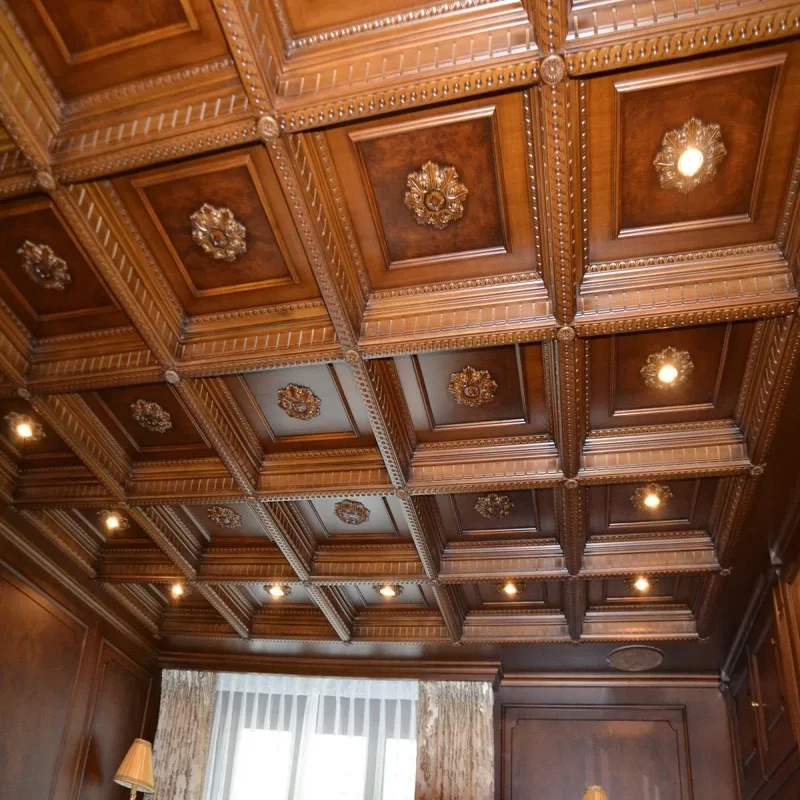
Traditional Coffered Ceiling Designs
- Ornate crown molding and decorative trim
- Stained wood finishes, often dark walnut or mahogany tones
- Smaller, more frequent coffer divisions
- Common in formal dining rooms and libraries
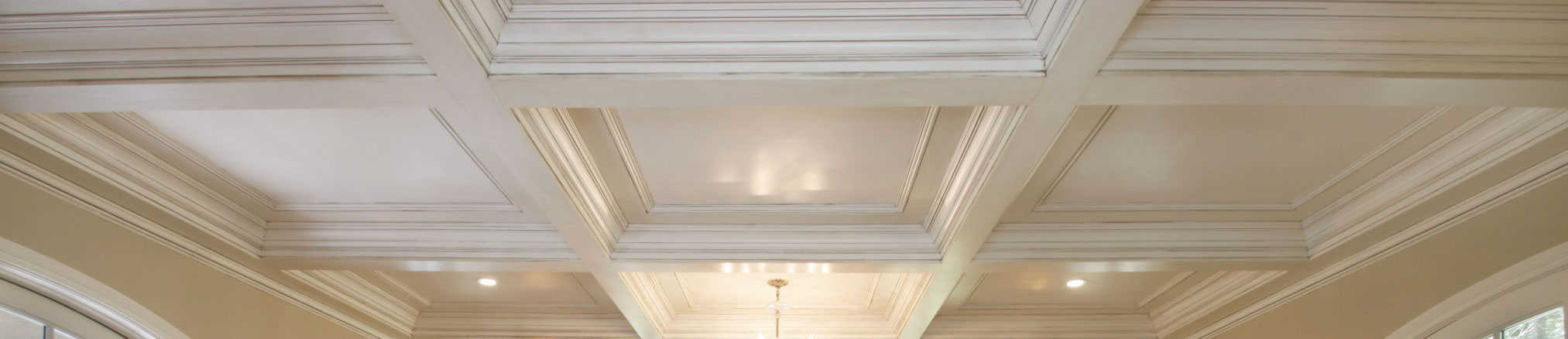
Modern Coffered Ceiling Designs
- Flat, simple beam profiles with minimal trim
- Painted finishes in white, black or matte neutrals
- Larger, fewer coffer sections for an open feel
- Common in great rooms, open concept living areas and new builds
This flexibility is exactly why coffered ceiling ideas work across so many different home styles. The structure stays the same. The finish details change everything.
How Coffered Ceiling Installation Actually Works?
This is where a lot of homeowners hesitate, assuming the process requires a master carpenter and weeks of on site framing. That used to be true. It isn't anymore.
Modern coffered ceiling systems are pre-engineered into kit form, meaning the beams, panel inserts and trim arrive cut and ready to assemble. Here's a simplified breakdown of how installation generally works:
- Measure the ceiling and determine the coffer grid layout based on room dimensions
- Mark beam placement to ensure even spacing across the ceiling
- Secure the primary support beams to ceiling joists or a mounting grid
- Install secondary cross beams to complete the coffer pattern
- Add trim and crown detailing around each panel for the finished look
- Paint or stain to match the room's existing finishes
Because these systems use lightweight materials instead of solid wood, most coffered ceiling installation projects can be completed using basic carpentry tools, without the need for structural reinforcement. This is a major shift from traditional, site built coffered ceilings, which historically required custom millwork and significantly longer install timelines.
But,
1. Does a coffered ceiling make a room feel smaller?
No, when designed correctly. A well-proportioned coffer grid actually draws the eye upward and outward, which can make a room feel larger and more intentional rather than boxed in.
2. Can a coffered ceiling work in a room with low ceilings?
Yes. Shallow beam coffered ceiling systems are specifically designed for rooms with 8 foot ceilings or less, using minimal beam depth so the ceiling height isn't compromised.
3. Is a coffered ceiling only for formal rooms?
With modern coffered ceiling designs becoming more popular, this treatment now shows up in family rooms, basements, home offices, and open concept layouts just as often as formal dining rooms.
Conclusion
A flat ceiling is a missed opportunity, especially in a room where every other surface has been carefully designed. A coffered ceiling brings architectural weight, light variation, and a finished look that flat drywall simply cannot deliver on its own.
Whether you're drawn to a traditional coffered ceiling design with rich wood tones or a modern coffered ceiling with clean, minimal lines, the goal stays the same: turning an overlooked surface into the focal point it was always meant to be.
If you're planning a renovation or new build, this is one upgrade worth prioritizing early. The right coffered ceiling installation doesn't just change how a room looks. It changes how the entire room feels.
-800x800.png "Custom Fit Shallow Beam")