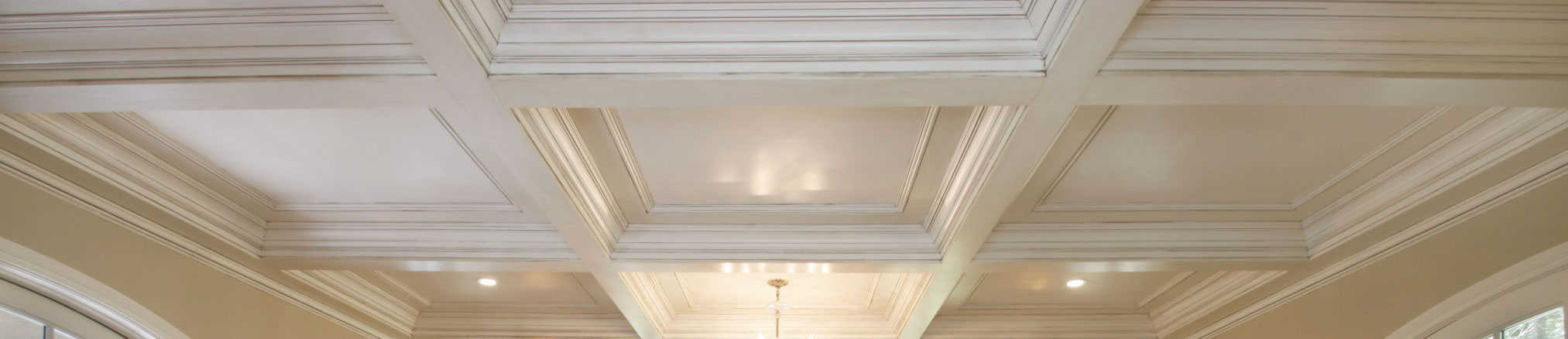



What Is a Wood Coffered Ceiling? Styles, Materials & Cost Guide (2026)
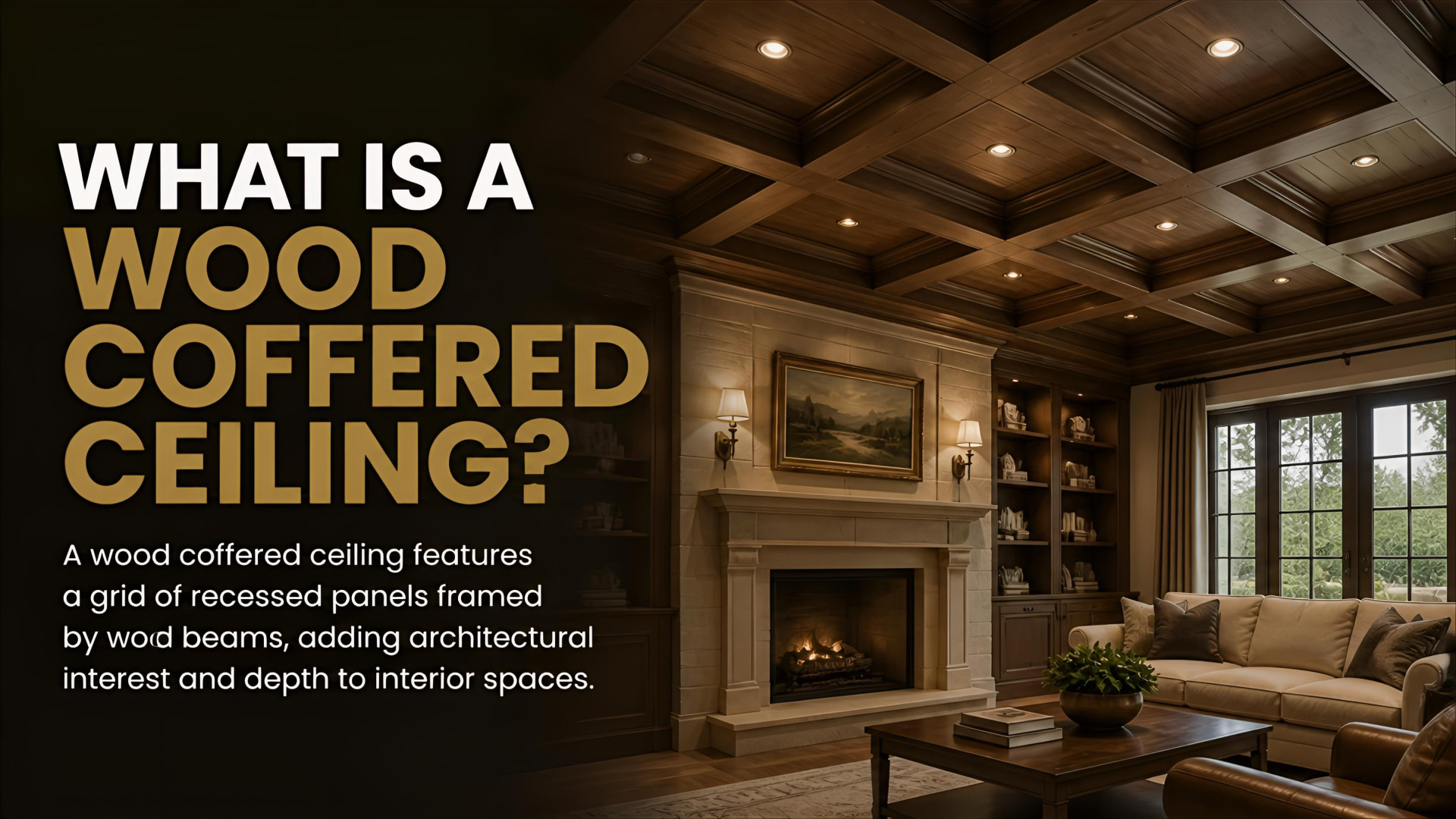
A wood coffered ceiling is a ceiling design made up of a grid of recessed panels, framed by intersecting beams or molding, creating a pattern of sunken "boxes" across the surface. The word "coffer" comes from the French term for a box or chest, which is exactly what the recessed sections resemble when viewed from below. Coffered ceilings turn a flat, featureless ceiling into a defined architectural element, and they remain one of the most requested upgrades in formal living rooms, dining rooms, libraries, and primary bedrooms.
This Tilton Coffered Ceilings guide covers what a coffered ceiling actually is, the most common styles and patterns, how materials compare, and what you can realistically expect to pay in 2026, whether you're planning a full custom-built ceiling or a lighter-weight faux wood system.
A Brief History of Coffered Ceilings
Coffered ceilings aren't a modern design trend, they date back to classical Greek and Roman architecture, where recessed panels were originally a structural byproduct of stone and concrete construction techniques before becoming a deliberate decorative choice. The style became especially prominent during the Renaissance, appearing in churches, courthouses, and civic buildings across Europe, where the grid pattern was used to convey formality, craftsmanship, and permanence. That historical association is part of why this historic ceiling design still reads as "upscale" today, the pattern carries centuries of architectural precedent behind it, and it remains one of the more recognizable pieces of architectural ceiling detail in residential design.
Types of Coffered Ceiling Patterns
Coffered ceilings aren't limited to one look. The ceiling grid pattern and beam depth can be adjusted to suit different room styles from a simple box beam ceiling to a more elaborate exposed beam grid:
- Square coffers: the most traditional and widely used pattern, evenly spaced square recesses across the ceiling.
- Rectangular coffers: elongated panels that work well in narrower rooms or hallways.
- Hexagonal or octagonal coffers: a more ornate, custom option often reserved for formal or historic-style interiors.
- Deep vs. shallow coffers: deeper recesses create stronger shadow lines and a bolder look; shallow coffers read as more subtle and modern.
The beam material and finish you choose (discussed below) will change how any of these patterns reads in a room, a deep, dark stained wood grid feels traditional and formal, while a painted or lighter faux wood grid can work in more transitional or modern spaces. Many of these patterns are built using the same decorative ceiling beams used in standalone exposed-beam ceilings, just arranged in a repeating grid instead of running beams alone.
Coffered Ceiling Materials Compared
Material choice affects both the final look and the total project cost more than any other decision you'll make. Here's how the main options stack up:
Real wood (walnut, mahogany, oak, poplar, maple, cherry): Real wood delivers authentic grain and can be stained to match existing millwork, but it's the heaviest and most expensive option, requires structural framing support, and is more prone to warping or cracking over time with humidity changes.
Drywall: The most budget-friendly material for the recessed panel sections, drywall is often paired with wood or faux wood beams rather than used for the entire grid. It keeps costs down but offers no architectural texture on its own.
PVC: A moisture-resistant, lower-cost alternative to solid wood, commonly used in budget-conscious builds, though it doesn't replicate wood grain texture as convincingly as HDU foam.
Faux wood (HDU foam / polyurethane): Molded from real wood to capture authentic grain, knotting, and texture, faux wood coffered ceiling systems are significantly lighter than solid lumber, install faster since they don't require the same structural reinforcement, and won't warp, crack, twist, or attract insects the way natural wood can over time. This is the material Tilton Coffered Ceilings builds with it gives you the visual weight and detail of a traditional wood coffered ceiling without the installation complexity or long-term maintenance real wood requires. The recessed sections themselves are often referred to as coffered ceiling panels, and faux wood versions of these panels are typically the lightest and easiest to install of any material on this list.
Coffered Ceiling Material Comparison
|
Material |
Relative Weight |
Material Cost (per sq ft) |
Durability |
Structural Support Needed |
Best For |
|
Real Wood (walnut, mahogany, oak) |
Heaviest |
$17–$30 |
Can warp/crack with humidity over time |
Yes, full framing |
Authentic grain, traditional/formal rooms |
|
Drywall |
Light |
$2–$3 |
Durable but no texture on its own |
Minimal |
Budget builds, paired with beams |
|
PVC |
Light |
Low–mid range |
Moisture resistant, less realistic texture |
Minimal |
Budget-conscious, humid areas |
|
Faux Wood (HDU foam / polyurethane) |
Lightweight |
Mid range |
Won't warp, crack, twist, or attract insects |
Minimal, no heavy framing |
Fast install, low maintenance, wood look without the weight |
How Much Does a Coffered Ceiling Cost in 2026?
Cost is the question most homeowners actually want answered, and it varies more than most guides let on, largely because the "coffered ceiling" covers everything from a simple drywall-and-molding grid to a fully custom mahogany build.
General cost range: Most sources put full installation (materials + labor) between roughly $10 and $60 per square foot, depending on material and design complexity.
Typical room cost: For an average 150-square-foot room, total project cost commonly lands between $2,200 and $8,500, with many homeowners reporting an average around $3,750–$5,000.
Material costs alone: Roughly $2 to $30 per square foot depending on material, drywall and plywood sit at the low end, premium real wood species like walnut or mahogany sit at the high end.
Labor costs alone: Typically $8 to $30 per square foot, since coffered ceiling installation is labor-intensive and usually requires a skilled carpenter, especially for custom grid layouts.
What changes the price:
- Room size and ceiling height (most professionals recommend at least 8-9 feet of ceiling height so the coffers don't make the room feel lower)
- Material selection (real wood vs. faux wood vs. drywall/PVC)
- Design complexity (simple square grid vs. custom hexagonal pattern)
- Decorative accents, crown molding, ceiling medallions, tin tile inlays, and lighting all add to the base cost
- Whether the existing ceiling needs repair or reinforcement before installation
Where faux wood changes the math: Because faux wood coffered ceiling systems are significantly lighter than solid lumber and don't require the same structural framing, installation time, and therefore labor cost, is typically lower than a full real-wood build, even though the visual result is comparable. If budget or installation timeline is a concern, this is usually the biggest lever you can pull without sacrificing the look.
Coffered Ceiling Cost at a Glance
|
Cost Factor |
Typical Range |
|
Full installation (materials + labor) |
$10–$60 per sq ft |
|
Average 150 sq ft room, total project |
$2,200–$8,500 (avg. ~$3,750–$5,000) |
|
Materials only |
$2–$30 per sq ft |
|
Labor only |
$8–$30 per sq ft |
|
Minimum recommended ceiling height |
8–9 feet |
Is a Coffered Ceiling Worth It?
Beyond the visual upgrade, coffered ceilings offer a few practical benefits: the recessed grid pattern helps absorb and diffuse sound compared to a flat ceiling, which is part of why the style was historically popular in large formal rooms. Real estate professionals also frequently cite coffered ceilings as a feature that reads as "upscale" to buyers, which can support perceived home value, though the actual return depends heavily on your local market and the quality of the finished installation.
DIY vs. Professional Installation
A basic drywall-and-molding coffered ceiling is within reach for an experienced DIYer with the right tools, but most real wood or custom-pattern installations are labor-intensive enough that professional installation is the more common route, and often the safer one, since a poorly aligned grid is difficult to fix after the fact. Faux wood systems tend to be the most DIY-friendly option in the wood-look category specifically because the components are lighter and mount without the structural reinforcement solid wood beams need.
Choosing the Right Coffered Ceiling System for Your Space
The right approach depends on your room's ceiling height, your budget, and how much long-term maintenance you're willing to take on. If authentic wood grain and the option to hide wiring or address structural elements matters most, a real wood beam system is worth the added weight and cost. If you want the traditional coffered look with less installation complexity and long-term maintenance, a faux wood system, like Tilton's Molded or Artisan Series beams, delivers the same architectural impact at a fraction of the weight.
Wood Coffered Ceiling Ideas by Room
Coffered ceiling ideas tend to work best in rooms with enough height and a formal or semi-formal purpose, the architectural detail is meant to be noticed, not tucked into a low-traffic hallway.
- Living room ceiling upgrade: A wood coffered ceiling in the living room is one of the most common applications, especially in open-concept layouts where a flat ceiling can feel undefined. A square or rectangular coffer grid over the main seating area adds a clear focal point without requiring any change to the floor plan.
- Formal dining room ceiling: Dining rooms are the classic setting for a coffered ceiling, the grid pattern pairs naturally with a centered chandelier or pendant, and the added depth reinforces the "formal" feel the room is usually designed around.
- Primary bedroom or library: Deeper, darker-stained coffers suit these more intimate spaces, while a lighter faux wood finish keeps the same detail from feeling heavy in a smaller room.
- Lightweight coffered ceiling system for renovations: For any ceiling renovation where minimizing structural work matters, older homes, finished basements, or rooms where you don't want to open up the ceiling for full framing, a lightweight coffered ceiling system built from faux wood panels is typically the most practical route, since it avoids the heavier structural support real wood requires.
FAQ’s
What is the difference between a coffered ceiling and a tray ceiling?
A coffered ceiling has multiple recessed panels arranged in a repeating grid pattern across the entire ceiling, while a tray ceiling has one single raised or recessed section, usually centered in the room, surrounded by a stepped border.
What is the minimum ceiling height for a coffered ceiling?
Most professionals recommend at least 8 to 9 feet of ceiling height before adding a coffered design, since the beam depth will lower the perceived ceiling height in the room.
How much does a wood coffered ceiling cost compared to faux wood?
Real wood coffered ceilings typically cost more per square foot due to material price and the structural framing required, while faux wood systems reduce both material weight and labor time, often lowering total installed cost without changing the visual result significantly.
Can a coffered ceiling be installed as a DIY project?
Simpler drywall or faux wood coffered ceiling kits can be DIY-friendly for experienced homeowners, but custom patterns, real wood installations, or rooms requiring structural changes are typically best left to a professional installer.
What are coffered ceiling panels made of?
Coffered ceiling panels are the recessed sections between the beams and can be made from drywall, PVC, real wood, or faux wood (HDU foam); faux wood panels are the lightest option and are molded to replicate real wood grain without the weight or maintenance of solid lumber.
Do coffered ceilings help with soundproofing?
The recessed grid pattern of a coffered ceiling can help diffuse and absorb sound compared to a flat ceiling surface, making it a practical addition in larger formal rooms in addition to its visual benefit.
Which rooms work best for a wood coffered ceiling?
Living rooms, formal dining rooms, primary bedrooms, and libraries are the most common applications, since these rooms typically have the ceiling height and formal design intent that a coffered grid is meant to reinforce.
-800x800.png)
-800x800.png)