


Primary Bedroom Ceiling Beams: Elegant Design Inspiration
Quick answer: Bedroom ceiling beams add architectural character, warmth and a focal point above the bed. Choose natural or faux wood for a traditional, rustic or farmhouse look, smooth beams for modern rooms, and darker metal-look beams for industrial accents. Scale the beams to your ceiling height, plan the layout around lighting, and remember that decorative faux beams are not structural. Follow the manufacturer's instructions for any product you choose.
A plain flat ceiling leaves a primary bedroom feeling unfinished. Bedroom ceiling beams change that by adding architectural character, warmth, depth and visual interest, and by drawing the eye toward the bed. Homeowners can choose traditional, modern, rustic or transitional designs, and the right style of bedroom ceiling beams depends on your ceiling height, your finishes and the mood you want at the end of the day. This guide covers beam styles, ceiling heights, layouts, lighting, material choices and the questions homeowners ask most.
Why Add Ceiling Beams to a Primary Bedroom?
Well-planned bedroom ceiling beams do more than decorate. They can:
- Add architectural character and depth: Lines and shadow replace a blank surface.
- Create a warmer, more inviting atmosphere: Wood tones and texture soften a large room.
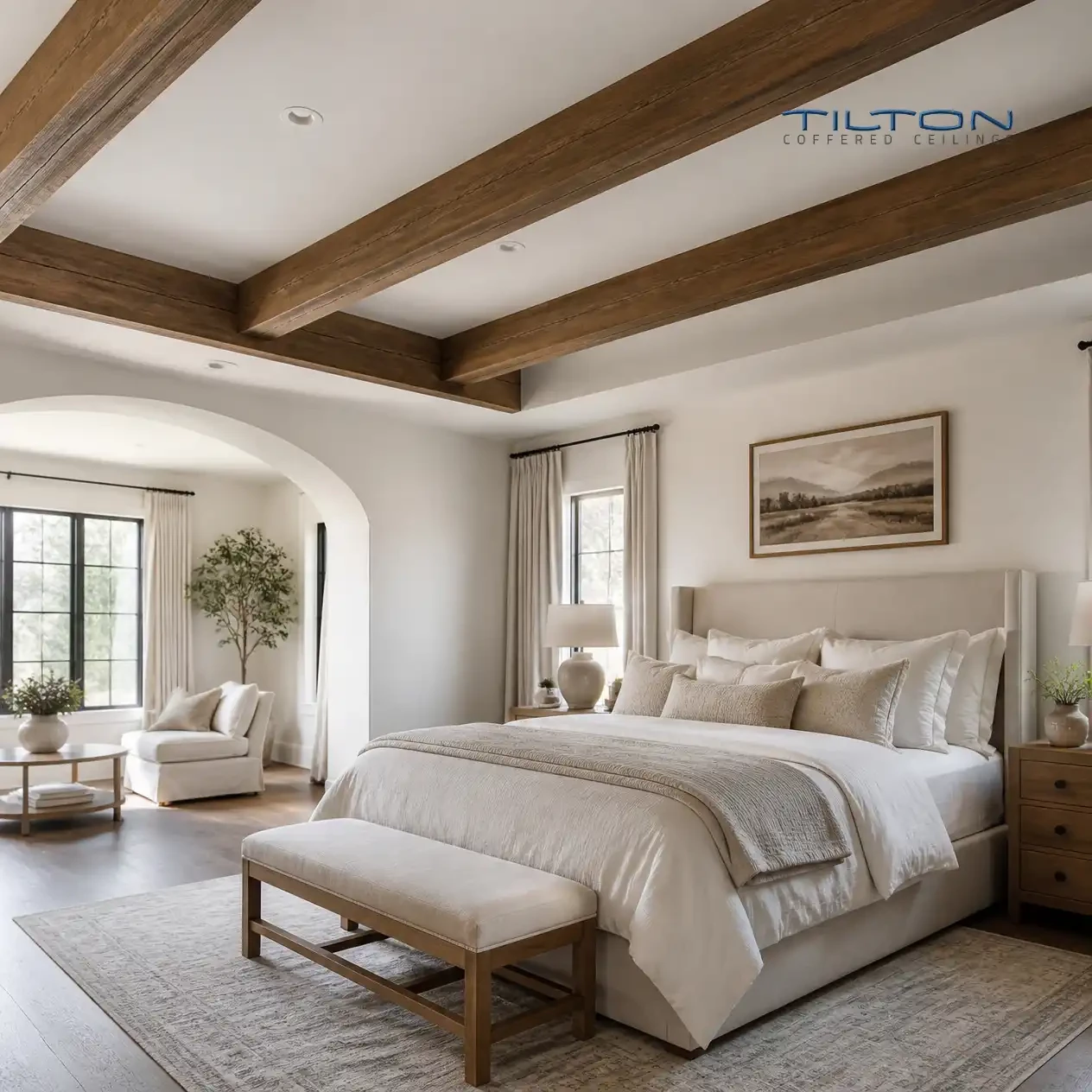
- Build a focal point above the bed: A central beam or a framed grid draws attention to the headboard wall.
- Complement furniture, flooring, wall colors and lighting: Beam tone can echo nightstands, floors or trim.
- Balance high or vaulted ceilings: Beams bring a tall room back to human scale.
One competitor project, from Barron Designs, matched walnut-toned beams to a bed edge and dresser, which shows how a beam finish can tie a room together. For materials and sizes, start with Tilton's faux beams for ceilings buying guide, and see how faux wood ceiling beams add warmth to modern interiors.
Elegant Primary Bedroom Ceiling Beam Ideas
Classic Natural Wood Bedroom Beams
Bedroom ceiling beams in natural wood bring authentic grain, warmth and a traditional feel. Natural wood suits classic and lodge-inspired rooms, and its character varies from beam to beam. Tilton offers Natural Series real wood beams. Confirm weight, finish and handling with the manufacturer before you plan the layout.
Faux Wood Beams for an Elegant Bedroom
Faux wood bedroom ceiling beams create a wood-inspired look with design flexibility. Tilton describes its faux beams as hollow and made from HDU polyurethane, and decorative only. Faux wood beams for ceilings, including faux wood beams for bedroom projects, can be ordered in different series, so the finish and texture can match the room. See the faux vs. real wood ceiling beams comparison.
Modern Smooth Ceiling Beams
Smooth faux bedroom ceiling beams offer clean lines, minimal detailing and neutral palettes. In a contemporary bedroom, a few evenly spaced beams in a quiet finish add structure without visual noise. Compare textures in our Artisan Smooth vs. Artisan Series guide.
Hand-Hewn and Rustic Bedroom Beams
Hand-hewn faux beams bring visible texture for farmhouse and rustic interiors. Tilton's Artisan Series has a hand-hewn texture and a consistent 1-inch thickness. Pair a rustic bedroom ceiling with linen bedding, warm lighting and natural flooring.
Molded Faux Wood Beams
Molded faux beams contribute a coordinated architectural look. Tilton's Molded Series is described as variable in thickness, which gives a sculpted appearance that reads well under soft lighting.
Industrial and Faux Iron Beam Accents
Darker, metal-inspired beams suit contemporary, industrial or transitional bedrooms, especially as an accent over a bed wall. Tilton's Industrial Series faux steel beams give faux iron beams a metal look. Use them sparingly in a bedroom, because the mood should stay restful. The faux steel beams, panels and hardware guide covers finishing details.
Bedroom Ceiling Beams for Different Ceiling Heights
Ceiling Beams for High Ceilings
In a large bedroom with a tall ceiling, scale is the main issue for bedroom ceiling beams. Use deeper beams, wider spacing and a clear pattern so the ceiling feels cohesive instead of empty. Beams also visually lower an expansive ceiling, which makes a big room feel more intimate.
Bedroom Beams for Vaulted Ceilings
On a vaulted bedroom ceiling, place bedroom ceiling beams along the slope, or across the room to break up the height. Symmetrical layouts centered on the bed feel calm and balanced. Decorative faux wood trusses and vaulted ceiling trusses can frame the room, including classic designs such as the king post truss or scissor truss ceiling. Decorative trusses do not carry roof load. See our truss ceiling ideas for vaulted ceilings, the decorative ceiling trusses style guide and the scissor truss vs. king post truss comparison.
On cathedral and sloped bedroom ceilings, let beam direction follow the existing architecture so the lines look intentional.
Bedroom Ceiling Beams for Low Ceilings
Low ceiling beam ideas for bedroom ceiling beams start with restraint. Choose slimmer-looking profiles, fewer beams with generous spacing and lighter visual finishes, such as a tone close to the ceiling. Avoid heavy, deep designs that crowd the room. We do not list product dimensions or a minimum ceiling height here. Your room, local requirements and the product decide, so measure first with the how-to-measure diagrams and read about custom-fit shallow beam kits.
Popular Bedroom Ceiling Beam Layouts
These layouts cover most bedroom ceiling beams projects:
- Parallel beams: Evenly spaced runs make a room feel orderly. Running them toward the bed wall draws the eye to the headboard, while running them across the room can make it feel wider.
- Crossbeam patterns: Beams crossing at right angles add structure and read as more formal.
- A central beam above the bed: One strong beam centered on the headboard creates a clear focal point. It works well in smaller rooms.
- Symmetrical arrangements: Matching beams on both sides of the room's center line suit traditional and hotel-inspired bedrooms.
- Decorative beam grids: A grid adds pattern and depth, and it suits larger flat ceilings.
- Vaulted ceiling beam arrangements: Beams follow the slope, or one beam marks the peak.
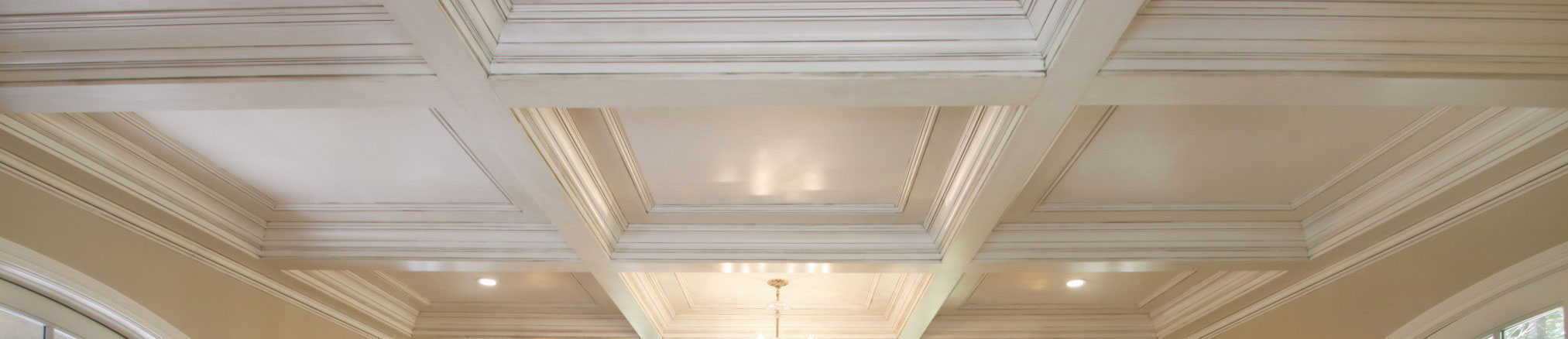
- Coffered ceiling-inspired layouts: A coffered bedroom ceiling uses a grid of recessed panels. Beam grids can echo that look. A coffer is, in architecture, a series of sunken panels in a ceiling. Learn more in our coffered ceiling guide.
Each layout changes proportion: parallel runs lead the eye along their direction, grids add density, and a single beam anchors the bed. Choose based on what the room needs.
Matching Bedroom Ceiling Beams With Interior Design Styles
Use these pairings to coordinate bedroom ceiling beams with bedding, walls, flooring and lighting.
Modern and Minimalist Bedrooms
Choose smooth beams in a quiet tone, white walls or soft neutrals, simple bedding and low-profile lighting. Keep the layout restrained.
Farmhouse and Rustic Bedrooms
Hand-hewn or textured beams pair with shiplap or painted wood walls, natural flooring and layered linens. A farmhouse bedroom ceiling works best when other finishes stay simple.
Traditional and Classic Bedrooms
Warm wood beams suit paneled walls, classic furniture and upholstered headboards. Symmetrical layouts fit here.
Contemporary and Transitional Bedrooms
Medium-tone smooth beams bridge traditional and modern. Match the beam tone to the flooring or bed frame, and keep the pattern simple.
Luxury and Hotel-Inspired Primary Bedrooms
For a hotel feel, center a beam layout on the bed, use soft indirect lighting and keep finishes cohesive. Add ceiling and wall paneling or decorative wall panels behind the headboard only if the room still feels calm.
Combining Ceiling Beams With Bedroom Lighting
- Recessed lighting: Place fixtures between beams so light and shadow work together. This is the most common approach for bedroom ceiling beams with recessed lighting.
- Pendant lighting: Where appropriate, use pendants over nightstands from approved fixture boxes.
- Chandeliers: A chandelier works best centered in the room, with beams arranged around it. Hang it from an approved fixture, not a decorative beam, unless the installation instructions allow it.
- Wall sconces: Sconces beside the bed keep the ceiling clear and add warm light.
- Indirect and ambient lighting: Soft light along the beams can emphasize texture. Confirm product compatibility first.
- Placement: Plan fixture positions and beam layout together.
Electrical work and fixture installation should follow applicable codes and be handled by qualified professionals where necessary.
Faux Wood Beams vs. Real Wood Beams for Bedrooms
|
Factor |
Faux wood beams |
Real wood beams |
|
Appearance and finish |
Wood-look finishes and textures; range depends on the product |
Authentic grain and variation |
|
Design flexibility |
Options vary by series |
Options vary by species and cut |
|
Materials |
Tilton describes its faux beams as hollow HDU polyurethane |
Solid wood |
|
Installation planning |
Tilton's buying guide describes mounting over wood blocking strips; confirm for your product |
Confirm with the manufacturer |
|
Maintenance |
Follow product guidance |
Follow product and finish guidance |
|
Best for |
Wood looks over existing ceilings |
Rooms where authentic wood is the priority |
These are general characteristics. We do not claim exact weights, costs, durability, fire ratings or moisture resistance. Read the full faux vs. real wood comparison for the trade-offs.
How to Choose the Right Bedroom Ceiling Beams
Work through this checklist before you order bedroom ceiling beams:
- Room size and ceiling height: Measure first.
- Existing features: Note soffits, vents, windows and light fixtures.
- Style: Match the beam look to your design direction.
- Finish and color: Order samples and view the colors and textures page. Check them in morning and evening light.
- Layout and spacing: Sketch the plan to scale.
- Lighting: Plan beams and fixtures together.
- Material: Compare natural and faux options on the compare page and product options.
- Installation: Decide between a qualified installer and a DIY approach based on the product instructions.
- Budget: Prices vary by size, finish and series. Use the quote tool and ask for current pricing.
Installation and Maintenance Considerations
- Plan the beam layout before installation.
- Check ceiling conditions and confirm suitable mounting methods. Barron Designs describes mounting blocks fastened to ceiling studs, with hollow beams slotted over them. Tilton's buying guide describes a similar blocking-strip approach, but confirm the method for your beam.
- Coordinate beams with lighting and other ceiling features.
- Follow the manufacturer's installation resources and use specified hardware, such as Tilton's installation products.
- Maintain finishes according to the material requirements.
Decorative ceiling beams and trusses are not structural supports unless a product is specifically engineered and approved for structural use. Never imply that decorative beams can support a ceiling or roof, and never attach them in a way that compromises the ceiling or building structure.
Create an Elegant Primary Bedroom With Decorative Ceiling Beams
The right bedroom ceiling beams, in the right style, finish and layout, can turn a plain primary bedroom into a warm, finished retreat. Pick a style that suits your interior, scale the beams to your ceiling, plan the lighting with the layout and follow the manufacturer's instructions. Explore decorative ceiling beams in Tilton's ceiling beams and trusses, browse the gallery, or contact the team with questions.
Frequently Asked Questions
1. Are ceiling beams a good idea for a primary bedroom?
Yes, in most cases. Bedroom ceiling beams add warmth, texture and a focal point above the bed. They suit many styles when scaled to the room. Match beam depth, spacing and finish to your ceiling height, and choose a restful tone for a bedroom.
2. Do ceiling beams make a bedroom look smaller?
They can if they are too deep, too dark or too closely spaced for the ceiling height. Shallow beams, lighter finishes and generous spacing keep a bedroom open. On a low ceiling, use fewer beams and match their tone closely to the ceiling.
3. What type of ceiling beams work best in a bedroom?
It depends on your style. Natural or hand-hewn beams suit rustic and traditional rooms, smooth beams suit modern ones, and darker metal-look beams work as accents. Choose the finish that matches your furniture, flooring and lighting, and order a sample first.
4. Are faux wood beams suitable for primary bedrooms?
Often yes. Tilton describes its faux beams as hollow and lightweight, with wood-look finishes and textures. They are decorative, not structural. Confirm the size, finish and mounting method for your exact product, and follow the manufacturer's installation instructions before you buy.
5. Can you add ceiling beams to a bedroom with a low ceiling?
Often, if the beams are sized for the room. Choose slim profiles, simple layouts, generous spacing and light finishes, and check clearance near lights and doors. We do not give a universal minimum height, so measure and check local requirements.
6. What ceiling beam designs work best for vaulted bedrooms?
Beams that follow the slope, one beam at the peak or a decorative truss work well. Symmetrical layouts centered on the bed feel balanced. Decorative trusses do not carry roof load, so follow the product's installation instructions and plan the layout around the vault.
7. How do you choose the right color for bedroom ceiling beams?
Match the beam tone to your flooring, bed frame or trim, or contrast on purpose. Light beams feel airy, medium tones suit most rooms and dark beams add drama. Order samples and view them in morning and evening light before you decide.
8. Can bedroom ceiling beams be combined with recessed lighting?
Yes. Recessed lights between beams are a common approach, and sconces or pendants can add layers. Plan fixture and beam positions together, and have electrical work done by a qualified professional following applicable codes. Do not hang fixtures from decorative beams unless instructions allow it.
9. Are faux wood beams better than real wood beams for bedrooms?
Neither is better in every case. Faux beams are decorative shells, and Tilton describes them as hollow and lightweight. Real wood offers authentic grain. Compare appearance, installation planning and maintenance for your room, and confirm the details with the manufacturer.
10. Can ceiling beams be installed above a bedroom bed?
Yes, a central beam or layout above the bed is a popular focal point. Check clearance, lighting and the mounting method first. Decorative beams are not structural and should not hold fixtures or loads unless the manufacturer's instructions clearly allow it.
-800x800.png "Custom Fit Shallow Beam")
-800x800.png "Faux Wood Ceiling Beams")
-800x800.png "Ceiling Trusses")