


Natural Series Real Wood Beams: When to Choose Authentic Timber
Faux wood beams solve most ceiling projects well, but not every project. Some buyers, especially across the US, specifically want genuine timber: real wood grain, natural variation from piece to piece, and the material authenticity that comes only from actual wood, not a material designed to replicate it. Natural Series real wood beams, also searched as real wood ceiling beams, solid wood ceiling beams, or simply wood beams for ceiling, exist for exactly that buyer. This guide covers what sets authentic timber apart, when it's genuinely the right call over faux wood, and what to weigh before choosing real wood ceiling beams for your project.
What Are Real Wood Ceiling Beams?
Real wood ceiling beams, sometimes called authentic wood ceiling beams, natural wood ceiling beams, or real timber ceiling beams, are decorative beams built from genuine solid or engineered timber rather than a molded wood-look material. Like faux beams, they're typically installed as a non-structural decorative element, adding architectural character, concealing wiring, or framing a ceiling, though solid wood beams can, in some structural configurations, genuinely bear load in a way faux wood beams cannot. It's worth being precise here: decorative real wood beam installations should not be assumed structural unless specifically engineered and confirmed as such by a qualified professional. Across the US, most residential hardwood and softwood species used in ceiling beam construction, oak, pine, fir, and similar, are widely available regionally, though exact species offerings should always be confirmed with the supplier.
What Makes Authentic Timber Different?
The core difference is material origin, not just appearance. Real wood carries natural grain patterns, knots, and color variation unique to each individual piece, no two beams look exactly alike, which is precisely the character many buyers are seeking. For a deeper look at species and grain structure specific to North American construction, the list of inventoried hardwoods in the United States gives a useful sense of the range domestic hardwoods span. Faux wood beams, even well-made ones cast from real wood molds, replicate a specific grain pattern consistently across every unit. Real wood's natural variation is a genuine trade-off: it's part of the authentic appeal, but it also means less predictability in exactly how each beam will look before installation.
Why Choose Real Wood Ceiling Beams?
The honest case for real wood comes down to authenticity mattering more than convenience for a given project. Genuine timber offers a material presence faux wood is specifically designed to imitate, for some buyers and some architectural contexts, that distinction matters enough to justify the added weight, cost, and installation complexity real wood typically brings. It's also worth noting real wood beams can be refinished, restained, or repainted differently over time in a way that's more limited with a faux beam's factory finish.
Real Wood vs. Faux Wood Ceiling Beams
|
Feature |
Real Wood Ceiling Beams |
Faux Wood Ceiling Beams |
|
Material |
Genuine solid or engineered timber |
HDU foam or similar, cast from real wood |
|
Natural grain |
Unique to each piece, genuinely variable |
Consistent, replicated from a real wood mold |
|
Appearance |
Authentic natural variation and character |
Realistic but consistent across units |
|
Weight |
Significantly heavier |
Lightweight, hollow construction |
|
Installation |
Often requires additional structural support and labor |
Mounts over blocking, generally more accessible |
|
Maintenance |
May need periodic sealing or refinishing |
Low, resists warping, cracking, pests |
|
Design character |
Genuine material authenticity |
Practical, consistent wood-look alternative |
|
Best suited projects |
Projects prioritizing authentic material above convenience |
Budget-conscious, faster installs, humid environments |
For the fuller comparison discussion, see Faux Wood vs. Real Wood: Which Is Right for You?, this section here focuses specifically on when authenticity itself is the deciding factor.
When Should You Choose Authentic Timber?
Consider real wood when:
- Authentic, natural material is a stated project priority, not just a nice-to-have
- Genuine grain variation is part of the desired look, not something to avoid
- The architectural style and budget can accommodate real wood's added weight and installation demands
- You want the flexibility to refinish or restain the beam differently in the future
- The project may specifically require solid wood for structural reasons, confirmed by a professional
If none of these apply strongly, faux wood beams, covered in the Faux Beams Buying Guide, will likely serve the project just as well at lower cost and installation complexity.
Real Wood Beams for Different Interior Styles
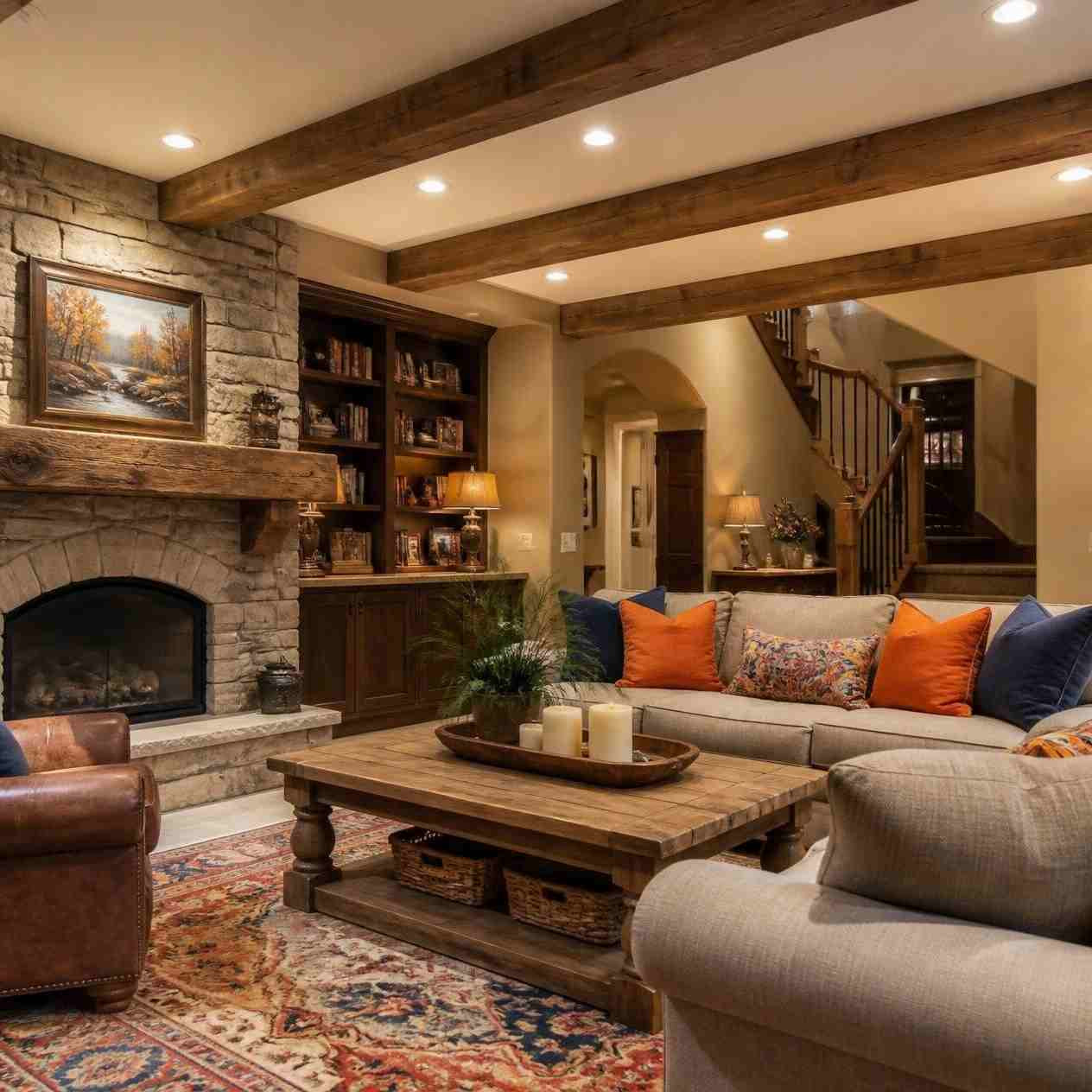
Rustic interiors: genuine grain and natural imperfection reinforce the authentic, handcrafted feel central to rustic design, and rustic ceiling beams built from real timber are among the most requested applications for this material across US homes.
Farmhouse interiors: real wood's natural variation pairs well with the lived-in, collected character farmhouse style often aims for, and real wood beams for farmhouse ceilings remain one of the most common design pairings.
Traditional interiors: solid timber has long been used in traditional architectural detailing, and real wood beams extend that same authenticity.
Craftsman interiors: natural materials and visible craftsmanship are central to this style, making real wood a strong fit.
Transitional interiors: carefully selected, lighter-finished timber can bridge traditional warmth and more contemporary lines, though this requires more deliberate material selection than a rustic application.
Real wood isn't limited to rustic settings, it's a material choice, not a style, and can suit any interior where authenticity itself is valued.
Real Wood Ceiling Beams for Vaulted and High Ceilings
Vaulted and high ceilings suit real wood beams well for the same reason they suit faux beams, the added height gives a substantial beam profile room to read as architectural rather than oversized, whether the room is a great room, dining room, or open-concept living space. The key difference to plan for is weight: real wood's added mass makes structural planning and installation logistics more significant considerations in a vaulted space than with faux wood, so confirming installation feasibility early in the project matters more here than with a lighter faux beam. For a broader look at how ceiling architecture scales in commercial or larger residential spaces, see Coffered Ceilings & Wood Beam Ceilings for Commercial Spaces, and for wall treatments that pair naturally with an exposed-beam ceiling, the Decorative Wall Panels guide.
Choosing the Right Wood Beam Size and Proportion
Deciding what size wood beams for ceiling your room needs follows the same core principles as any ceiling beam decision, ceiling height, room width, beam spacing, and existing architectural details all factor in. Real wood's added weight makes getting this right upfront more important than with faux wood, since adjustments after installation are more disruptive. Measuring actual ceiling height and room dimensions before finalizing an order is essential, and confirming beam weight and structural requirements with the supplier or installer, for both solid wood ceiling beams for living rooms and larger great-room installations alike, is a step faux wood projects can sometimes skip but real wood projects generally shouldn't.
Where Can You Use Real Wood Ceiling Beams?
Common applications include living rooms, great rooms, kitchens, dining rooms, entryways, home offices, bedrooms, vaulted spaces, and open-concept interiors, the same range of rooms faux wood beams suit, since the application logic is about room character and scale more than material. The material choice changes weight and installation planning, not which rooms are appropriate.
What to Consider Before Buying Real Wood Beams
- Wood species and how it affects grain, color, and finish options
- Beam dimensions and how they scale to your room
- Finish, stained, painted, or left natural
- Ceiling height and whether it can accommodate the beam's actual weight
- Installation method and whether professional installation is required, see Installation Products and Accessories for mounting hardware considerations
- Access to the installation area, especially for heavier beams
- Whether any structural requirements apply, confirmed by a qualified professional
- Total budget, including installation labor, not just material cost
- Whether the project also calls for matching architectural elements, such as decorative trusses or a faux wood mantel, for a cohesive look
Real Wood or Faux Wood: Which Fits Your Project?
Real wood may be appropriate when: authentic material matters more than convenience, natural variation is specifically desired, and the project can accommodate the added weight, cost, and installation complexity.
Faux wood may be appropriate when: lower weight and simpler installation are priorities, a consistent appearance across all beams is preferred, and the project calls for a practical, decorative wood-look solution rather than genuine timber specifically. Tilton's Molded Series, Artisan Series, and Artisan Smooth cover the faux wood options in full, and the Industrial Series faux steel beams offer a non-wood alternative entirely for a more industrial direction.
Neither material is universally better, the right choice depends entirely on whether authenticity itself is the deciding factor for your specific project.
Final Thoughts on Natural Series Real Wood Beams
Authentic timber offers something faux wood is specifically designed to replicate but can't fully duplicate: genuine natural variation and material presence. For buyers where that distinction matters, whether for design authenticity, refinishing flexibility, or specific structural needs, Natural Series real wood beams are worth the added weight, cost, and installation planning they require. For everyone else, faux wood beams deliver most of the same visual result with meaningfully less complexity. The right answer depends on which trade-off matters more for your specific ceiling.
FAQs
What are real wood ceiling beams?
Real wood ceiling beams are decorative beams built from genuine solid or engineered timber rather than a molded wood-look material, offering authentic natural grain and material presence.
What makes real wood beams different from faux wood beams?
Real wood carries natural, unique grain variation from piece to piece, while faux wood beams, even well-made ones, replicate a consistent grain pattern cast from a real wood mold.
Why choose authentic timber for a ceiling?
Genuine timber offers material authenticity and natural variation that faux wood is specifically designed to imitate but can't fully replicate, worthwhile for buyers who prioritize that authenticity over the added cost and installation complexity.
Are real wood ceiling beams structural?
Decorative real wood beam installations should not be assumed structural. Solid wood beams can, in some engineered configurations, genuinely bear load, but this must be confirmed by a qualified structural professional, not assumed.
Can real wood beams be used on vaulted ceilings?
Yes, vaulted ceilings suit real wood beams well, though the added weight makes structural planning and installation logistics more important considerations than with faux wood in the same space.
What rooms work best with real wood ceiling beams?
Living rooms, great rooms, kitchens, dining rooms, entryways, bedrooms, and vaulted spaces all suit real wood beams, the same range as faux wood, since room fit is about scale and character more than material.
How do real wood beams compare with faux wood beams?
Real wood offers genuine material authenticity and natural variation at the cost of significantly more weight, higher cost, and more complex installation; faux wood offers a lighter, more budget-accessible alternative with a consistent appearance.
What should I consider before buying real wood ceiling beams?
Wood species, beam dimensions, finish, ceiling height and weight capacity, installation method, access to the installation area, any structural requirements, and total project budget including installation labor.
-800x800.png "Faux Wood Ceiling Beams")
-800x800.png "Ceiling Trusses")
-800x800.webp "Faux Beams for Ceilings: The Complete Buying Guide")