


Molded Series Faux Wood Beams: Features, Pricing & Best Uses
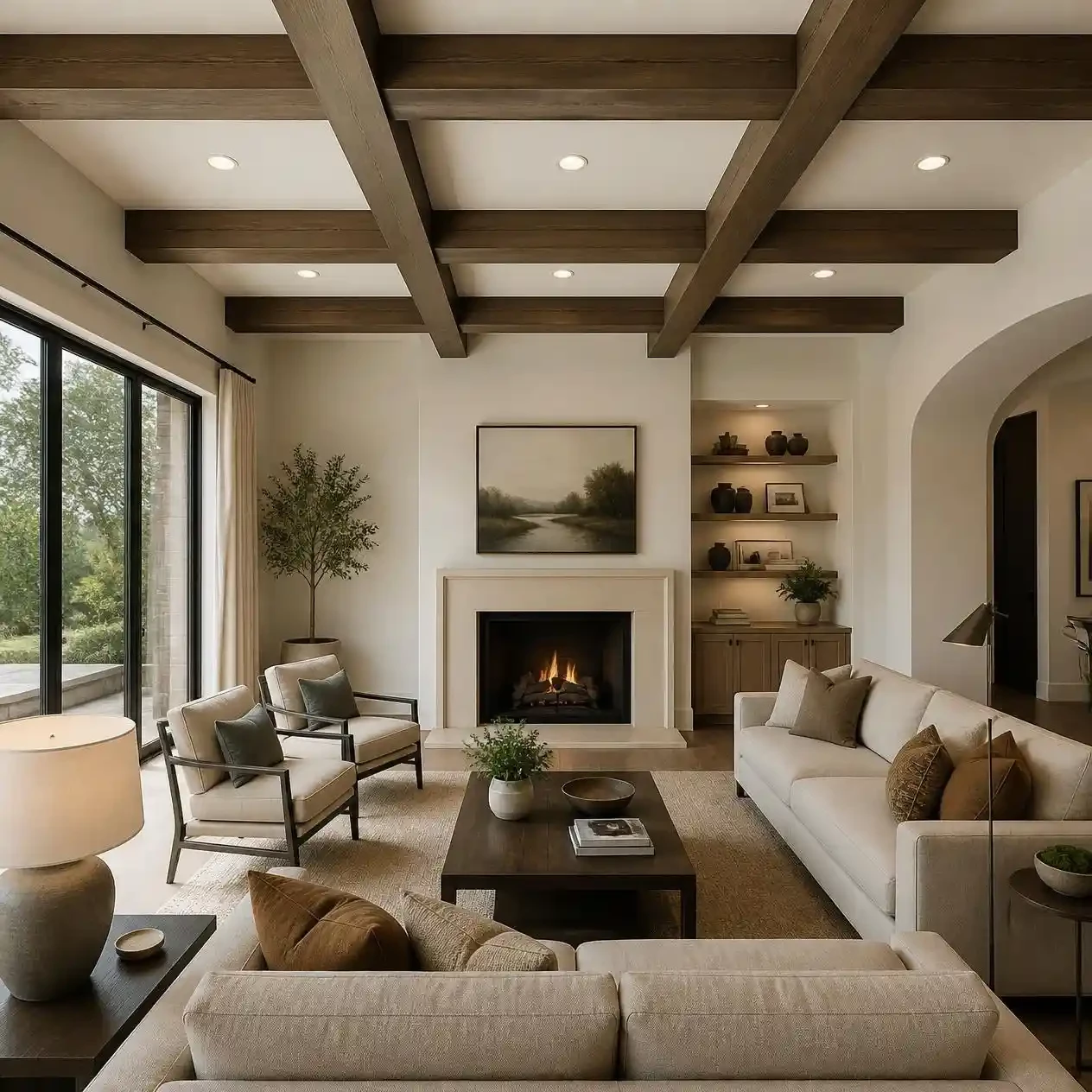
Table of Content
- What Are Molded Series Faux Wood Beams?
- Key Features
- How Molded Series Pricing Works
- What Size Beam Should You Choose?
- Best Uses (by room)
- Molded Series for Vaulted Ceilings
- Molded Series vs. Real Wood Beams
- Design Ideas
- Installation Considerations
- Maintenance
- Common Mistakes
- Are They Worth It?
- FAQ
If you've started researching faux wood beams, you've likely run into the same question fairly quickly: which product line actually fits your project? Molded series faux wood beams are the standard, most widely used entry point into faux beam ceilings, the line most homeowners land on when they want the visual character of exposed wood beams without the weight, cost, or installation demands of real timber. This guide covers what makes the Molded Series specifically what it is, how pricing works, what sizing to consider, and where these beams perform best.
Quick Answer: Are Molded Series Faux Wood Beams Right for Your Project?
Molded series faux wood beams are lightweight, hollow beams cast to replicate real wood grain and texture, designed as a decorative, not structural, ceiling treatment. They suit most residential applications, from standard 8-9 foot ceilings to vaulted rooms, and are generally the more budget-accessible option compared to more heavily hand-detailed lines like Artisan Series. They're a strong fit for homeowners who want a genuine wood-look upgrade without the installation complexity real wood beams require; they're a weaker fit for anyone needing structural load-bearing capability, which faux beams don't provide.
What Are Molded Series Faux Wood Beams?
Molded series faux wood beams are hollow beams manufactured by casting high-density urethane (HDU) foam or a similar material from real wood molds, which is what gives the finished surface its grain, knotting, and texture rather than a flat or artificial appearance. Because the beam is hollow, it mounts by sliding over wood blocking strips already secured to the ceiling, the beam itself carries no structural load and exists purely as a decorative, architectural treatment. This construction approach is shared across most faux wood beam product lines; what distinguishes "Molded Series" specifically as a product name is the finish and detailing approach used within Tilton's broader beam lineup, positioned as the accessible, standard-construction option relative to more specialized lines.
Key Features of Molded Series Faux Wood Beams
- Realistic wood-look appearance: grain and texture cast from real wood, not printed or sculpted
- Lightweight, hollow construction: installs without the structural reinforcement solid timber requires
- Variable profile thickness: a construction characteristic of the Molded line specifically, distinguishing it from the more uniform thickness of Tilton's Artisan Series
- Decorative, non-structural application: built to add architectural character and conceal wiring or existing structural elements, not to bear weight
- Broad design compatibility: works across a range of interior styles rather than being narrowly suited to one aesthetic, unlike the more specifically industrial-styled Industrial Series faux steel beams or the more authentic-material Natural Series (Real Wood)
How Much Do Molded Series Faux Wood Beams Cost?
Pricing for any faux wood beam product depends on several factors working together, not a single number: beam length, width and depth (profile size), the total quantity needed for a room, any finish or stain customization, and, separately from the beam cost itself, installation labor. It's worth distinguishing three different cost layers before evaluating any faux beam purchase:
Product cost, the price of the beams themselves, which scales with size and quantity. Installation cost, labor for mounting blocking and installing the beams, which varies by installer and project complexity. Total project cost, the combined figure, which is what actually determines whether a beam ceiling fits your budget.
Because exact pricing depends on specific dimensions, finish, and order quantity, the most reliable way to get an accurate number is a direct quote based on your room's measurements rather than a generic per-foot estimate, the same beam length can vary in cost significantly depending on profile size and finish selection.
What Size Faux Wood Beam Should You Choose?
Beam sizing is one of the most common questions buyers have before ordering, and it depends on a few measurable factors specific to your room:
- Ceiling height: taller ceilings generally support a deeper, more substantial beam profile without feeling oversized; lower ceilings usually call for a shallower profile to avoid making the room feel compressed.
- Room scale: a large open-concept great room can carry a wider beam spacing and larger profile than a smaller, more enclosed room.
- Beam spacing: how far apart beams are placed across the ceiling affects how large or small each individual beam should read visually.
- Visual proportion: the goal is a beam that reads as architecturally intentional relative to the room, not oversized or undersized against the surrounding space.
Because the right size depends on your specific room dimensions, it's worth measuring ceiling height, room width, and intended beam spacing before finalizing an order, and confirming sizing against actual product specifications rather than estimating.
Best Uses for Molded Series Faux Wood Beams
Living Rooms: one of the most common applications, typically as a defined grid or set of parallel beams over the main seating area to create a focal point.
Kitchens: beams over an island or the main cooking area add architectural warmth to a functional space, often paired with a lighter finish to keep the room feeling open.
Dining Rooms: beams reinforce the more defined, intentional feel a dining room typically calls for compared to adjacent casual spaces.
Great Rooms: larger open-concept spaces can support a full beam grid or coffered treatment at a scale smaller rooms can't accommodate.
Entryways: a shorter run of beams at an entry can set the tone for a home's interior style immediately upon entering. A matching faux wood mantel over a nearby fireplace is a common way to extend the same material into an adjacent room.
Bedrooms: typically a lighter touch than a living room or great room, often just a few beams rather than a full grid.
Vaulted and high ceilings: see the dedicated section below; this is one of the strongest applications for Molded Series beams specifically.
Molded Series Faux Wood Beams for Vaulted Ceilings
Vaulted and high ceilings are one of the best-suited applications for faux wood beams generally, and Molded Series beams specifically, because the added height gives a beam profile room to read as substantial without feeling oversized the way it might in a standard 8-foot room. Beam placement in a vaulted ceiling typically follows the roofline or ridge structure, with spacing planned around the room's width and the roof pitch of the vault itself. Because vaulted ceilings vary significantly in pitch and height from home to home, it's worth planning beam placement and sizing specifically for your ceiling's actual geometry, a template that works in one vaulted room won't necessarily translate directly to another. For a full look at how faux beams handle vaulted spaces across Tilton's product lines, see the Faux Beams Buying Guide.
Molded Series Faux Wood Beams vs. Real Wood Beams
|
Factor |
Molded Series Faux Wood Beams |
Real Wood Beams |
|
Appearance |
Realistic grain cast from real wood molds |
Authentic natural grain and character |
|
Weight |
Lightweight, hollow construction |
Significantly heavier, solid material |
|
Installation |
Mounts over blocking, generally more accessible |
Often requires additional structural support and labor |
|
Pricing |
Generally more accessible than solid wood at comparable size |
Typically higher material and installation cost |
|
Customization |
Finish and stain options within product line |
Full range of species, stains, and finishes |
|
Maintenance |
Low, resists warping, cracking, and pests |
Higher, may need periodic sealing or refinishing |
|
Structural use |
Non-structural, decorative only |
Can occasionally be genuinely structural depending on the specific beam |
|
Best applications |
Budget-conscious upgrades, faster installs, humid environments |
Projects prioritizing authentic material above all else |
Design Ideas for Molded Series Faux Wood Ceiling Beams
- Rustic farmhouse: pairs well with a rough-hewn or textured finish and wider beam spacing
- Modern farmhouse: a cleaner, lighter-stained beam against white or neutral ceiling color
- Traditional: darker stain, tighter spacing, often combined with crown molding
- Contemporary: fewer, more widely spaced beams with a smooth or minimal-texture finish
- Mountain/lodge style: deeper profile beams with a heavier, more rustic texture, often paired with decorative trusses for a more dramatic vaulted look
- Open-concept rooms: a full grid or coffered layout to visually define the space without adding walls
Installation Considerations
- Measure the ceiling and confirm height, width, and any structural obstructions
- Determine beam placement and spacing based on room proportions
- Select beam dimensions appropriate to ceiling height and room scale
- Confirm mounting/blocking requirements before beams arrive, Tilton's Installation Products and Accessories categories cover the hardware most installations need
- Plan joints and transitions where beams meet walls or each other
- Prepare the ceiling surface as needed
- Install according to manufacturer guidance
- Inspect alignment and spacing once installed, before considering the project complete
Maintenance and Long-Term Considerations
Molded series faux wood beams generally require minimal ongoing maintenance, occasional dusting is typically sufficient to keep the finish looking as intended, since the material doesn't develop the cracking, warping, or pest vulnerability real wood can over time. It's still worth periodically inspecting visible joints and the surrounding ceiling for any changes, and following manufacturer guidance for any finish-specific care recommendations.
Common Mistakes to Avoid
Choosing a beam size disconnected from the room's actual proportions.
Solution: measure ceiling height and room scale before selecting a profile, rather than choosing based on appearance in a photo alone.
Ignoring ceiling height when planning beam depth.
Solution: match beam depth to available height — a deep profile in a standard-height room can feel heavy rather than architectural.
Treating decorative beams as structural.
Solution: understand upfront that Molded Series beams are non-structural and are not designed to bear load.
Not planning installation access in advance.
Solution: confirm blocking and mounting requirements before beams arrive, not on installation day.
Focusing only on beam price rather than total project cost.
Solution: budget for installation labor alongside the product cost from the start.
Are Molded Series Faux Wood Beams Worth It?
For most homeowners wanting the visual character of exposed wood beams without the weight, cost, and installation complexity of real timber, yes, Molded Series beams offer a genuinely accessible way to add architectural detail to a ceiling. They're a strong choice when budget and installation ease matter alongside appearance. They're a weaker fit for projects specifically requiring authentic, all-natural material regardless of cost, or any application requiring genuine structural load-bearing capability, which no faux beam product provides. As with most interior finish decisions, the right choice depends on which trade-offs matter most for your specific project.
FAQs
What are molded series faux wood beams?
Molded series faux wood beams are hollow, lightweight beams cast from real wood molds to replicate authentic grain and texture, designed as a decorative ceiling treatment rather than a structural element.
How much do faux wood beams cost?
Cost depends on beam size, length, quantity, and finish, plus separate installation labor, there's no single flat rate, and the most accurate figure comes from a quote based on your room's actual measurements.
Are faux wood beams cheaper than real wood beams?
Generally yes, faux wood beams typically cost less in both material and installation than real wood at a comparable size, since installation doesn't require the same structural reinforcement.
Can faux wood beams be used on vaulted ceilings?
Yes, vaulted and high ceilings are one of the strongest applications for faux wood beams, since the added height allows a substantial beam profile to read as architectural rather than oversized.
What size faux wood beam should I use?
Beam size should be based on your ceiling height, room scale, and intended spacing, taller ceilings and larger rooms generally support deeper, wider beam profiles than standard-height rooms.
Are faux wood beams structural?
No, faux wood beams, including Molded Series, are decorative only and are not designed to bear structural load.
Where can faux wood beams be used?
Common applications include living rooms, kitchens, dining rooms, great rooms, entryways, bedrooms, and vaulted or high-ceiling spaces.
Are faux wood beams worth it?
For most homeowners wanting the look of exposed wood beams without the weight, cost, and installation demands of real timber, yes, though projects requiring authentic natural material or genuine structural capability are better served by real wood.
-800x800.png "Custom Fit Shallow Beam")
-800x800.png "Faux Wood Ceiling Beams")
-800x800.png "Ceiling Trusses")