


Industrial Series Faux Steel Beams: Loft & Modern Ceiling Ideas
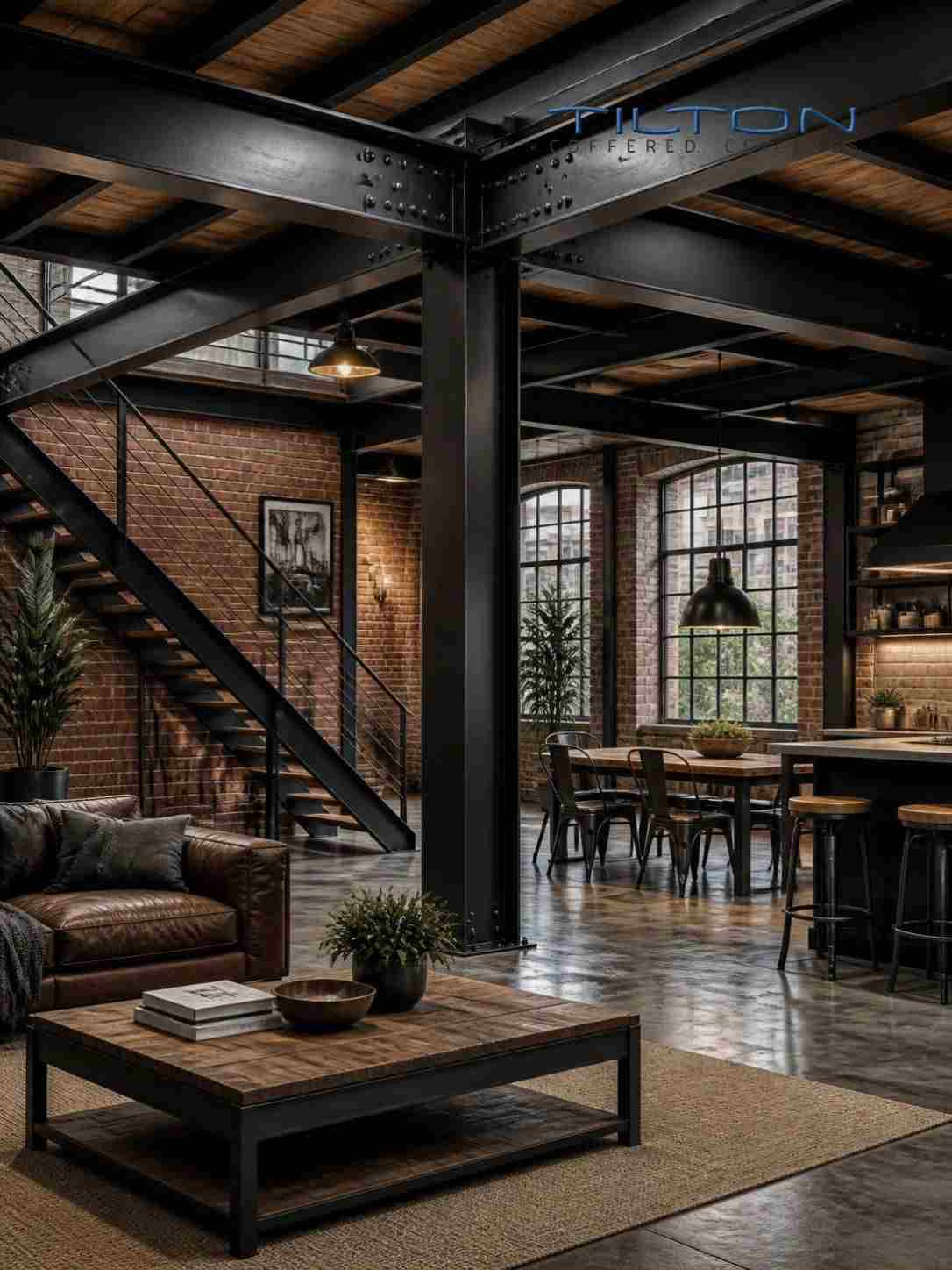
A ceiling full of exposed steel beams used to mean one thing: an actual converted loft in a former warehouse or factory building. Today, that same architectural statement is available to any home or commercial space through faux steel ceiling beams, lightweight beams finished to replicate welded iron or steel, bolt and rivet detailing included, without the weight or structural cost of the real material. This guide is about where and how to actually use them: loft-style living rooms, modern kitchens, vaulted ceilings, home offices, and commercial interiors across the US that want genuine industrial character.
What Are Faux Steel Ceiling Beams?
Faux steel ceiling beams are decorative, non-structural beams, typically molded from high-density urethane foam, finished to look like welded iron or steel rather than wood. They serve the same architectural purpose as faux wood beams (adding ceiling character, concealing wiring, framing a space) but with an entirely different visual language: weld seams, rust or patina texture, and bolt/rivet hardware instead of wood grain. Visually, the difference from wood beams isn't subtle, faux steel beams read as industrial and modern by design, where faux wood beams read as warm and traditional.
Why Faux Steel Beams Work So Well in Loft Interiors
The appeal of faux steel beams in loft-style spaces comes from matching the architectural language; industrial style interiors are already built around, exposed brick, concrete-inspired finishes, open floor plans, and high ceilings all pair naturally with a steel beam grid overhead. In a genuine converted warehouse, these elements exist because the building was never designed to hide them; faux steel beams let a newly built or renovated space borrow that same visual honesty intentionally. Paired with black architectural hardware, modern lighting fixtures, and large windows, the beams become a deliberate focal point rather than an afterthought.
Modern Ceiling Ideas Using Faux Steel Beams
Open-Concept Living Rooms
A full beam grid over the main living area reads as architecturally intentional in an open floor plan, especially when paired with a matching accent wall or exposed structural element elsewhere in the space.
Modern Kitchens
Beams running over an island or main cooking area add industrial character without requiring any change to cabinetry or countertops, a lower-disruption way to introduce the style than a full renovation.
Loft-Style Spaces
This is the most natural application, a full steel-look beam treatment reinforces the warehouse-conversion aesthetic the space is already built around, whether it's a genuine converted building or new construction designed to look like one.
Vaulted Ceilings
The added height of a vaulted ceiling gives faux steel beams room to read as substantial rather than busy, see the dedicated section below.
Home Offices
A single beam or small grid overhead adds visual interest to video calls and in-person meetings alike, while reinforcing a modern, serious design tone.
Commercial and Hospitality Interiors
Restaurants, breweries, and retail spaces use faux steel beams to reinforce an industrial brand identity, see Coffered Ceilings & Wood Beam Ceilings for Commercial Spaces for the broader commercial application context, including cost and contractor considerations.
How to Use Faux Steel Ceiling Beams Without Making a Room Feel Heavy
Faux steel's visual weight is real even though the material itself is light, a few planning considerations keep a beam ceiling from feeling oversized:
- Beam spacing: wider spacing reads as more open; tighter spacing creates a stronger architectural statement but needs adequate ceiling height to avoid feeling low
- Ceiling height: standard 8-9 foot ceilings can carry a lighter beam treatment; vaulted and high ceilings support a fuller grid
- Beam direction: running beams the long way across a room tends to visually extend the space; running them the short way emphasizes width
- Lighting and wall color: lighter wall tones and intentional lighting placement prevent a dark steel-look beam grid from making the room feel closed in
- Balance with furniture and materials: pairing steel beams with warmer materials elsewhere (wood flooring, textiles) keeps the room from feeling cold
Faux Steel Beams vs. Wood Ceiling Beams
|
Factor |
Faux Steel Ceiling Beams |
Wood Ceiling Beams |
|
Visual style |
Industrial, modern, metal-look |
Warm, traditional to contemporary depending on finish |
|
Industrial aesthetic |
Strong natural fit |
Not a natural fit |
|
Modern interiors |
Excellent fit |
Works with lighter/smoother finishes |
|
Rustic interiors |
Not a natural fit |
Strong natural fit, especially hand-hewn finishes |
|
Loft design |
Purpose-built for this style |
Can work but isn't the defining material |
|
Weight considerations |
Lightweight if faux; heavy if real steel |
Lightweight if faux; heavy if real timber |
|
Maintenance |
Low, finish is manufactured, won't rust |
Low for faux; moderate for real wood |
|
Best-use scenarios |
Industrial, modern, commercial/hospitality spaces |
Rustic, farmhouse, traditional, transitional spaces |
Where wood beams suit a design, Tilton's Natural Series real wood beams and faux wood lines, Molded Series, Artisan Series, and Artisan Smooth, cover that material family in full detail.
Can Faux Steel Beams Work With Other Ceiling Styles?
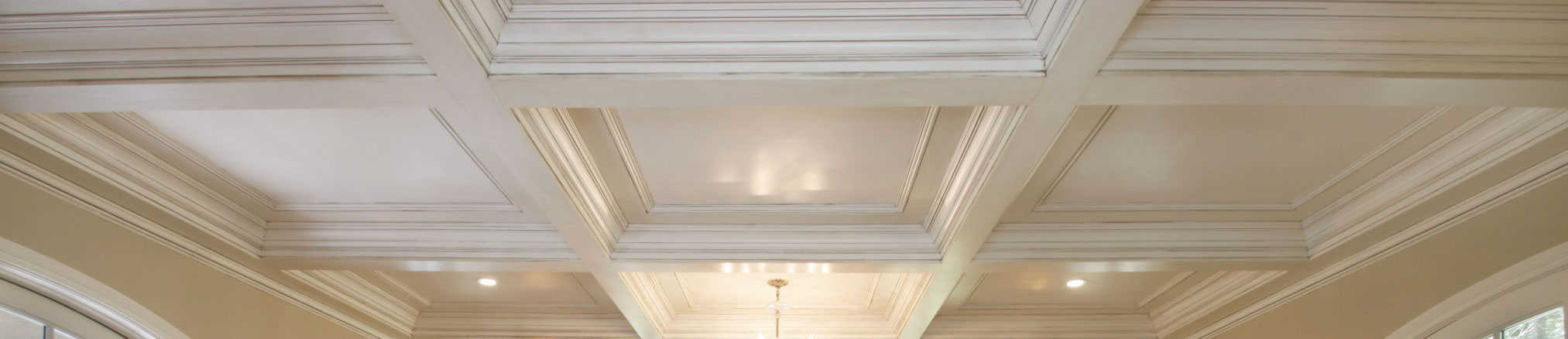
Faux steel beams can pair with select other ceiling treatments where the design genuinely supports it. A wood coffered ceiling grid built with faux steel beams instead of wood creates an industrial variation on a traditionally formal ceiling style, an unexpected but intentional combination for a modern space. Steel beams can also run alongside tongue and groove ceiling planking in a mixed-material design, with the planking adding warmth the steel alone wouldn't provide. Floating ceiling panels with a metal-look finish are another natural pairing for the same industrial design language. Not every combination makes sense, a heavily rustic plank finish alongside industrial steel beams, for instance, tends to read as mismatched rather than intentional.
Faux Steel Beams for Commercial Ceiling Design
Restaurants, retail spaces, offices, and hospitality interiors across the US increasingly use faux steel beams to establish an industrial brand identity without the structural cost of a genuine warehouse conversion. The same lightweight, non-structural installation advantages that apply to residential projects apply here, faster installation, lower cost than structural steel, and the ability to retrofit into an existing commercial ceiling without extended closure. Confirm any project-specific code or installation requirements with a qualified commercial contractor before specifying faux steel beams at commercial scale.
Design Tips for Choosing Faux Steel Ceiling Beams
- Measure the room and confirm actual ceiling height
- Decide whether beams should run the long or short direction of the space
- Plan beam spacing relative to room scale
- Coordinate beam placement with lighting fixtures
- Consider how wall and ceiling finishes will read against a steel-look beam
- Match the overall architectural style, confirm industrial actually fits the space
- Decide whether the beams should be the room's primary focal point or a supporting element
- Account for any existing ceiling details the beams need to work around
- Confirm installation requirements and mounting hardware before ordering, see Installation Products and Accessories
Are Faux Steel Ceiling Beams Right for Your Space?
Consider them when:
- You want a genuine industrial aesthetic
- You have a loft, open-concept, or modern space
- You want stronger ceiling definition and a clear architectural focal point
- The room's existing materials (brick, concrete, metal fixtures) already lean industrial
Consider other beam styles when:
- You want a traditional or rustic wood appearance
- Your design centers on natural timber character, see the Natural Series guide
- The room's existing architecture doesn't support an industrial direction
Neither material is universally better, the right choice depends entirely on whether the room's design direction is industrial or not.
FAQ
What are faux steel ceiling beams?
Faux steel ceiling beams are lightweight, non-structural decorative beams finished to replicate welded iron or steel, including rust, patina, and bolt/rivet detailing, without the weight of real structural steel.
Are faux steel ceiling beams structural?
No, like faux wood beams, faux steel beams are decorative only and not designed to bear load.
Where can faux steel beams be used?
Living rooms, kitchens, lofts, vaulted ceilings, home offices, and commercial or hospitality interiors all suit faux steel beams, particularly spaces already leaning industrial or modern in style.
Do faux steel beams work in modern homes?
Yes, faux steel beams are a strong fit for modern and contemporary interiors specifically, often more so than traditional wood beam styles.
Can faux steel beams be used on vaulted ceilings?
Yes, the added height of a vaulted ceiling gives faux steel beams room to read as substantial and architectural rather than visually heavy.
Are faux steel beams suitable for loft interiors?
Yes, loft-style spaces are one of the strongest applications, since faux steel beams reinforce the same warehouse-conversion aesthetic lofts are architecturally built around.
How do faux steel beams compare with wood beams?
Faux steel beams suit industrial and modern design directions, while wood beams, real or faux, suit rustic, farmhouse, and traditional styles. Neither is universally better; the right choice depends on the room's design direction.
Can faux steel beams be used in commercial interiors?
Yes, restaurants, retail spaces, and offices commonly use faux steel beams to establish an industrial brand identity, with the same installation and cost advantages as residential applications.
-800x800.png "Custom Fit Shallow Beam")
-800x800.png "Faux Wood Ceiling Beams")
-800x800.png "Ceiling Trusses")