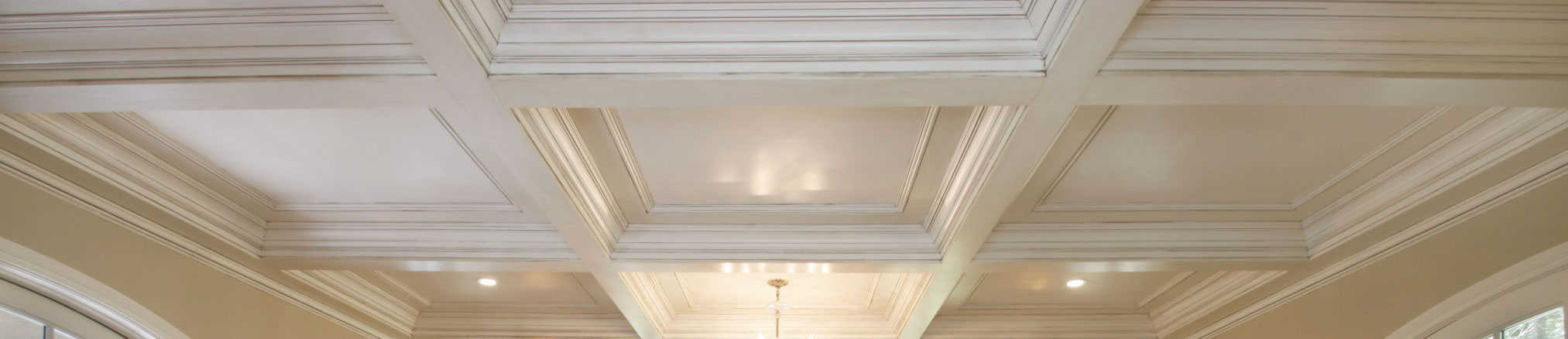



Faux Wood vs. Real Wood Ceiling Beams: Which Is Right for You? (2026)
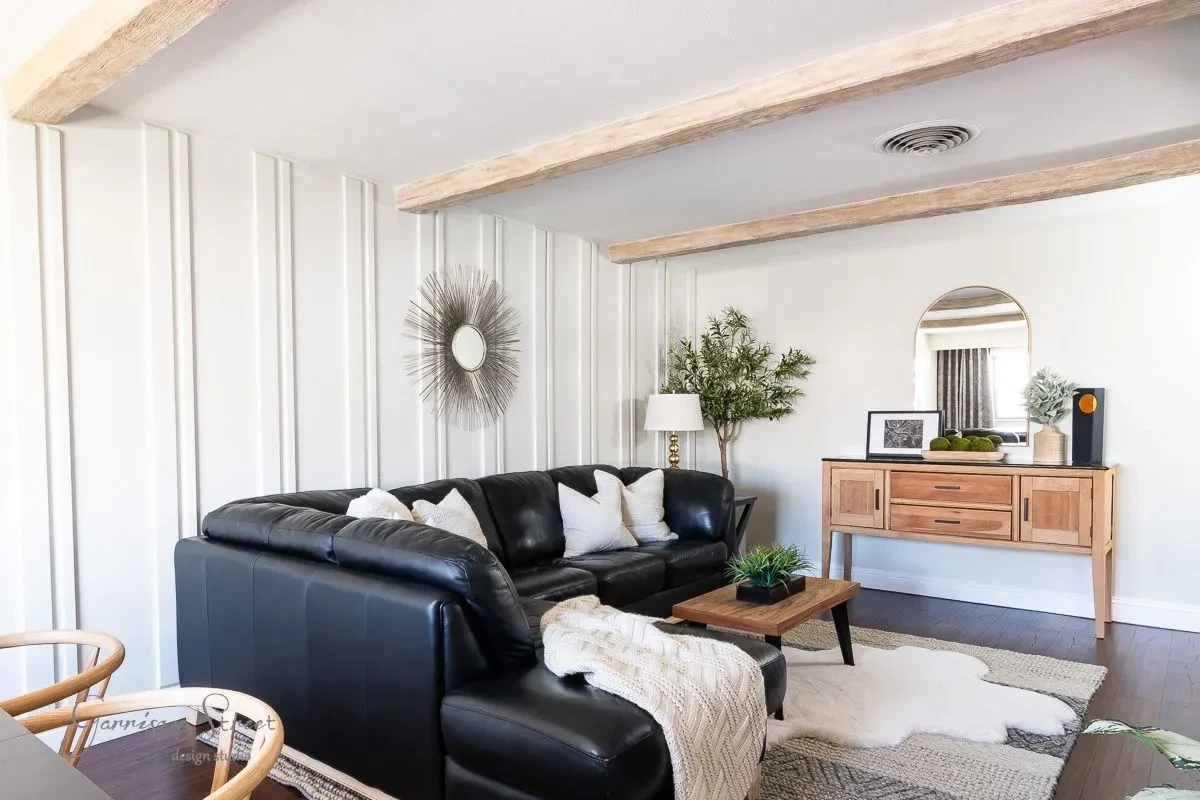
Choosing between ceiling faux beams and real wood beams comes down to five factors that matter more than personal taste alone: material and construction, weight and installation, durability and moisture resistance, cost, and authenticity. Both options can deliver a beautiful finished ceiling, the right choice depends on your budget, your ceiling structure, and how much long-term maintenance you're willing to take on. This Tilton Coffered Ceilings guide breaks down each factor directly so you can make a confident decision instead of guessing.
Faux Wood Beams vs. Real Wood Beams: Pros and Cons at a Glance
|
Factor |
Ceiling Faux Beams |
Real Wood Beams |
|
Material |
HDU foam / polyurethane, hollow construction |
Solid timber or hollow real-wood box beams |
|
Weight |
A few lbs per linear foot |
Significantly heavier, often 10x+ per foot |
|
Structural capability |
Non-structural, decorative only |
Solid wood beams can offer structural support; hollow real-wood box beams typically cannot |
|
Installation |
One-person install, mounts to blocking |
Often requires professional labor, sometimes heavy machinery |
|
Moisture resistance |
Resistant to warping, rot, and pests |
Prone to warping/cracking without sealing and maintenance |
|
Maintenance |
Low, occasional dusting |
Higher, periodic staining, sealing, refinishing |
|
Cost |
Lower material and labor cost |
Higher material cost, higher labor cost |
|
Authenticity |
Molded from real wood masters, close grain replication |
Genuine timber, natural aging and character |
HDU Foam vs. Solid Timber: What's the Material Difference?
The core difference between ceiling faux beams and real wood options starts with material. Faux beams are built from high-density urethane (HDU) foam or polyurethane, engineered wood-look materials molded directly from real timber masters to capture authentic grain patterns. Because the beam shell is hollow rather than solid, this is fundamentally a hollow beam vs solid beam construction question: faux beams mount over simple blocking strips with nothing but air inside, while real wood options split further into solid wood beams (a single solid timber cut) and real wood box beams (three real wood planks joined into a hollow box shape, which is lighter and less expensive than a fully solid cut).
This distinction matters for the structural vs non-structural beams question that comes up constantly in this comparison: solid wood beams, when installed correctly, can offer genuine structural support. Faux wood beams and hollow real-wood box beams generally cannot, both are decorative only, built to add visual weight and conceal wiring or ductwork rather than bear load. If your project actually needs a beam to carry structural weight, that requirement alone may settle the decision before cost or style even enter the conversation.
Some manufacturers also offer engineered wood beams as a middle-ground option, built from real wood veneers or composite cores rather than solid timber or foam, though these are less common than the faux-vs-solid-wood choice most buyers are actually weighing.
Weight and Installation: What the Difference Actually Means for Your Project
Beam weight per linear foot is where the practical difference between these two options becomes obvious fastest. Ceiling faux beams typically weigh just a few pounds per foot, light enough that one person can lift and mount most sections without help. Real wood beams, solid or box-style, can weigh many times more per foot, which changes the entire installation labor comparison: heavier real wood beams often require a professional crew, specialized lifting equipment, and additional structural reinforcement to the ceiling joists themselves before installation can even begin.
That difference compounds on a full-room project. A room using 6-10 beams across a vaulted ceiling will see dramatically different labor costs depending on whether each beam needs two or three installers and lifting equipment (real wood) or a single person working from a ladder (faux). This is one of the more underappreciated parts of the faux-vs-real decision, the sticker price on the beams themselves isn't the full budget for ceiling beams; installation labor can be just as significant a line item, especially with real wood.
Durability, Moisture & Long-Term Maintenance
This is where the durability comparison wood beams buyers actually care about tends to favor faux options clearly. Real wood is a porous material, which means humidity and warping risk is a real, ongoing concern, wood beams can develop warping, cracking, or splitting as they respond to seasonal humidity changes, and untreated or unsealed real wood is also vulnerable to pest damage over time. Faux wood beams, built from HDU foam or polyurethane, don't share this vulnerability: the material resists moisture, rot, and pests by construction, not because of a coating that eventually needs reapplying.
The long-term maintenance comparison follows the same pattern. Real wood beams typically need regular dusting, periodic sealing, and, if left unfinished, a fresh coat of stain or paint every few years to keep their appearance. Faux wood beams arrive already finished to look like natural wood and generally need nothing more than occasional dusting for the life of the installation. So which lasts longer, faux or real wood beams? In terms of resisting rot, cracking, and pest damage specifically, faux wood beams tend to outlast real wood with meaningfully less upkeep required to get there, though real wood that's properly sealed and maintained can also last for decades, it simply asks more of the homeowner along the way.
Cost Comparison: Is Faux Wood Cheaper Than Real Wood Ceiling Beams?
Yes, in nearly every published cost comparison, faux wood beams come out less expensive than real wood on both material and installation. The cost difference between faux and real wood beams comes from two compounding factors: real wood costs more per linear foot as raw material (especially with exotic or larger-dimension species), and real wood's added weight drives up installation labor cost on top of that. When you're comparing faux ceiling beams vs solid wood beams cost, it's worth evaluating both the material price tag and the labor estimate together, since real wood's installation costs alone can rival or exceed the material cost of an equivalent faux beam project.
Real wood ceiling beams cost per foot vs faux typically shows a meaningful gap at every size tier, and that gap tends to widen as beam dimensions increase, since larger real wood beams both cost more as raw lumber and require more reinforcement to install safely. If budget for ceiling beams is the primary constraint on your project, faux wood is almost always the more economical starting point without requiring a compromise on final appearance.
Authenticity: Can You Tell the Difference Between Faux and Real Wood Beams?
This is the objection that stops most buyers from considering faux wood seriously, and it deserves a direct answer: modern faux wood beams are molded from real wood masters, meaning the grain pattern, knotting, and surface texture are cast directly from actual timber rather than sculpted or printed. The result is authentic wood grain and genuine wood texture that closely replicates true-to-wood appearance, including the kind of natural wood imperfections, knots, grain variation, subtle surface irregularity, that make real timber look real in the first place, rather than a smooth, uniform fake.
Is faux wood as good as real wood for ceiling beams when it comes to look alone? For the vast majority of viewing distances and lighting conditions in a residential ceiling, yes, most people cannot reliably tell the difference between a well-made faux beam and real timber once installed and viewed from floor level. The authenticity vs practicality trade-off narrows considerably at that point: you're not sacrificing much visible realism for the practical advantages of lighter weight and lower maintenance. Where real timber character still has a genuine edge is at extremely close inspection or in projects specifically valuing 100% authentic material, historic restoration work, for instance, sometimes calls for real wood specifically because of that requirement, independent of appearance.
Resale Value: Does Beam Material Affect Home Value?
Resale value ceiling beams is a common concern, and the honest answer is that beam material rarely moves the needle on its own. Buyers and appraisers respond to the presence of architectural beam detail, the visual upgrade a coffered or exposed-beam ceiling provides, far more than whether the beams underneath are solid timber or faux wood. Will faux wood beams devalue my home compared to real wood? There's no consistent evidence that they do; a well-installed, well-finished faux wood beam ceiling reads the same to most buyers as real wood at a glance, and the design impact is what drives perceived value, not the specific material behind it.
Common Misconceptions About Faux Wood Beams
"Faux beams look cheap compared to real wood." This was a fair criticism of older foam beam products, but it doesn't hold up against beams molded from real wood masters. Do faux beams look cheap compared to real wood in 2026? Generally no, the manufacturing process has closed most of that visual gap.
"Faux wood beams aren't good enough for high-end homes." Faux wood beams good enough for high-end homes is really a question of finish quality and installation, not material category, premium faux wood lines are used regularly in high-end residential and commercial projects specifically because they deliver the visual impact of timber without the weight and structural demands real wood adds to a build.
"Designers only recommend real wood." Do designers recommend faux or real wood beams depending entirely on the project's priorities. Many designers reach for faux wood specifically for its installation flexibility and consistent finish, reserving real wood recommendations for projects where authenticity of material, not just appearance, is a stated requirement.
Which One Should You Choose?
Should I get faux or real wood ceiling beams? If your priorities are budget, faster installation, and low long-term maintenance, ceiling faux beams are the clearer choice for the large majority of residential and commercial projects. When to choose real wood over faux beams comes down to a shorter list of specific scenarios: you need genuine structural load-bearing capability from a solid wood beam, you're working on a historic restoration where material authenticity is a stated requirement, or you specifically want the option to refinish, restain, or repaint the beam differently down the road as your design changes, real wood's customization flexibility over time is a genuine advantage faux beams don't fully replicate once installed.
Are faux wood beams worth it compared to real wood for most homeowners? For the majority of projects, living rooms, kitchens, primary bedrooms, vaulted ceilings, yes, given the combined savings on material cost, installation labor, and long-term maintenance. If your project instead calls for real, natural material character with the flexibility to refinish over time, decorative wood beams in a real timber option remain a strong choice, and it's worth working with a supplier who offers both faux and real wood lines so you're not locked into one material before you've compared the actual beams side by side.
Frequently Asked Questions
Should I get faux or real wood ceiling beams?
For most residential and commercial projects, ceiling faux beams are the better fit due to lower cost, easier installation, and minimal long-term maintenance. Real wood is worth choosing specifically when you need genuine structural support, are working on a historic restoration requiring authentic material, or want the flexibility to refinish the beam yourself over time.
Is faux wood as good as real wood for ceiling beams?
Visually, yes for most viewing conditions, modern faux beams are molded from real wood masters, so the grain, knotting, and texture closely replicate genuine timber. The difference becomes more noticeable only under very close inspection or in projects where material authenticity itself is a requirement, not just appearance.
Which lasts longer, faux or real wood beams?
Faux wood beams generally outlast real wood with far less maintenance, since they resist rot, warping, and pest damage by construction. Real wood can also last for decades, but only with consistent sealing, staining, and upkeep, faux wood achieves comparable longevity with minimal upkeep by comparison.
Is faux wood cheaper than real wood ceiling beams?
Yes, in nearly every published comparison. Faux wood costs less both in material price per foot and in installation labor, since its lighter weight avoids the structural reinforcement and specialized crews real wood often requires.
Can you tell the difference between faux and real wood beams?
Most people cannot reliably distinguish a well-made faux beam from real timber once it's installed and viewed from normal room distance, since faux beams are cast directly from real wood grain patterns rather than artificially textured.
Will faux wood beams devalue my home compared to real wood?
There's no consistent evidence that beam material affects resale value on its own. Buyers and appraisers respond more to the presence of architectural beam detail itself than to whether the beams are faux or real wood underneath.
Do designers recommend faux or real wood beams?
It depends on the project's priorities rather than a blanket preference. Many designers choose faux wood for its installation flexibility and consistent finish, and reserve real wood recommendations for projects where material authenticity is a specific, stated requirement.c
-800x800.png "Custom Fit Shallow Beam")
-800x800.png "Faux Wood Ceiling Beams")
-800x800.png "Ceiling Trusses")